
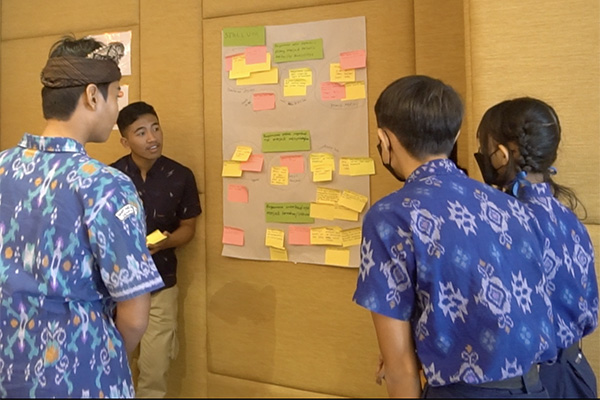
Using Human-Centered Design to Create a Gender-Equitable Environment for Very Young Adolescents
As part of Breakthrough ACTION’s efforts to advance innovative social and behavior change approaches for youth, the project applied human-centered design to develop gender-equitable interventions with very young adolescents in three of the Global Early Adolescent Study multi-year cohort sites: Kinshasa in the Democratic Republic of the Congo and Denpasar and Semarang in Indonesia. Human-centered design was selected as a methodology for meaningful youth engagement in designing programs that shape their lives.
Design and Test Reports
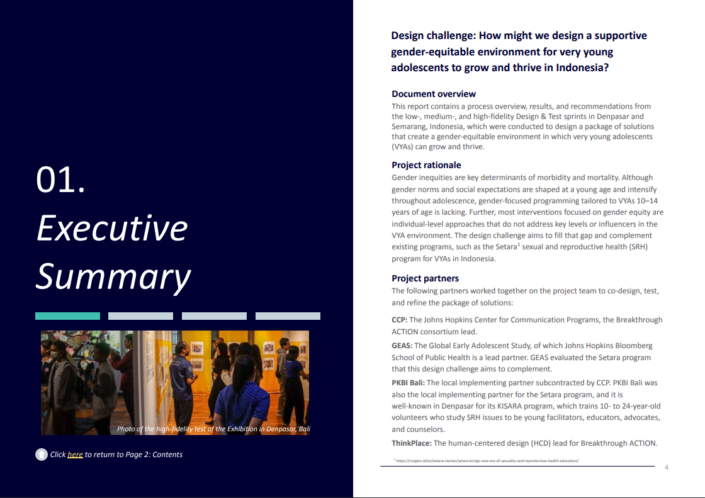
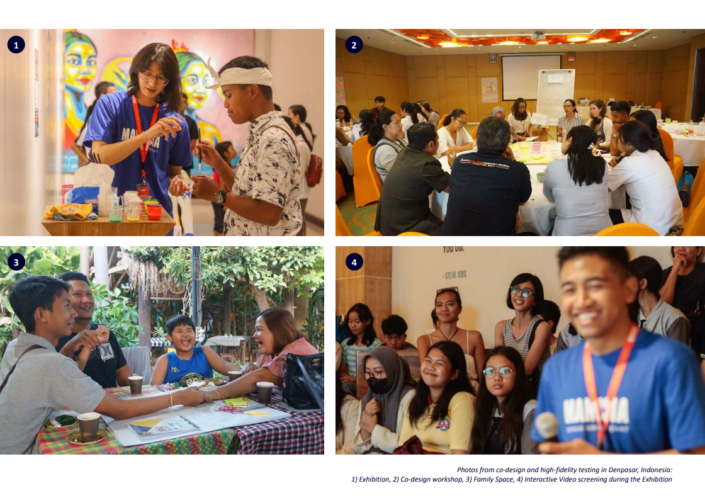
Breakthrough ACTION produced several materials to document the design process, including three design and test reports that detail the HCD activities conducted in Indonesia and the Democratic Republic of the Congo.
Indonesia
- High-fidelity [ Bahasa Indonesia | English ]
- Low- and medium-fidelity [ English ]
Democratic Republic of the Congo
- Low-fidelity [ English ]
BAHASA INDONESIA
Penerapan pendekatan HCD untuk penguatan program kesetaraan gender remaja di Republik Demokratik Kongo dan Indonesia [PDF]
ENGLISH
Design & Test Report: Indonesia [PDF]
Design & Test Report: DRC [PDF]
Engaging Parents in SRH: Programs for VYAs in the DRC [PDF]
Creating a Gender-Equitable Environment for VYAs: Messages and Evidence to Persuade Decision Makers [PDF]
EN FRANÇAIS
Engagement des parents dans la SSR : Programmes pour les très jeunes adolescents en la RDC [PDF]
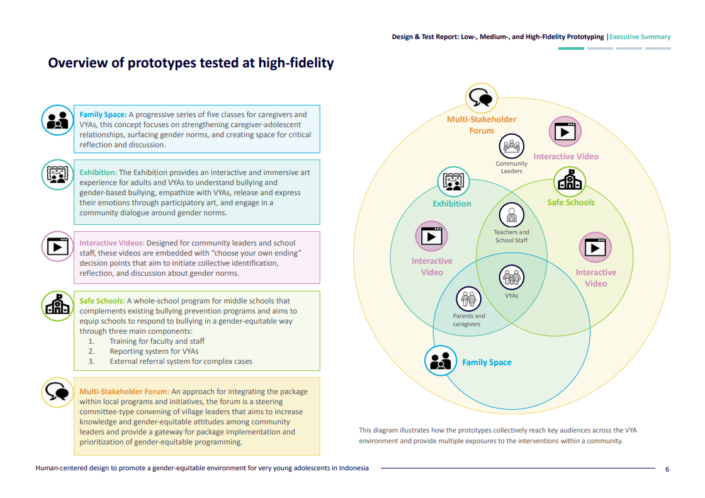
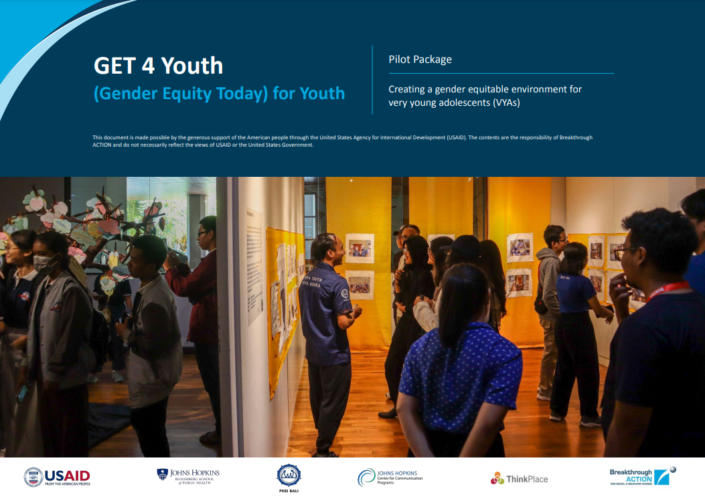
Pilot Package
Related Resources
- Addressing Gender Inequity During Early Adolescence in Indonesia: Implications for Programs and Policies from a Human-Centered Design Process
- Creating a Gender-Equitable Environment for Very Young Adolescents: Messages and Evidence to Persuade Decision Makers
- Engaging Parents in Sexual and Reproductive Health: Programs for Very Young Adolescents in the Democratic Republic of the Congo
- Leveraging Human-Centered Design to Improve Gender-Equitable Adolescent Programming in the DRC and Indonesia: Process Brief and Learnings
Source: Johns Hopkins Center for Communication Programs
Date of Publication: July 30, 2026