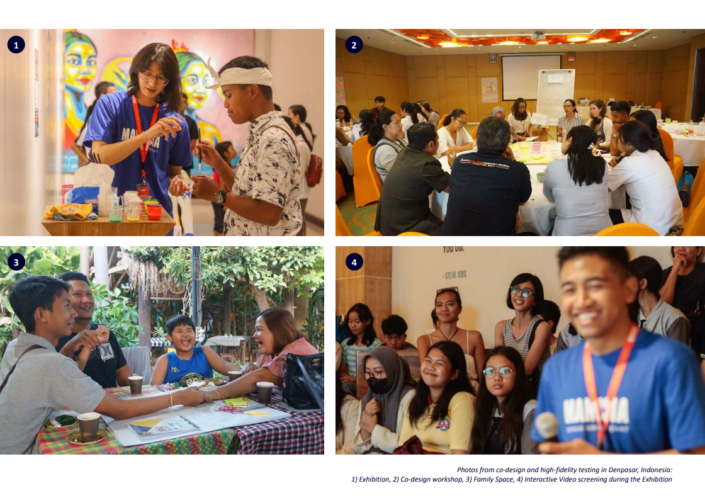
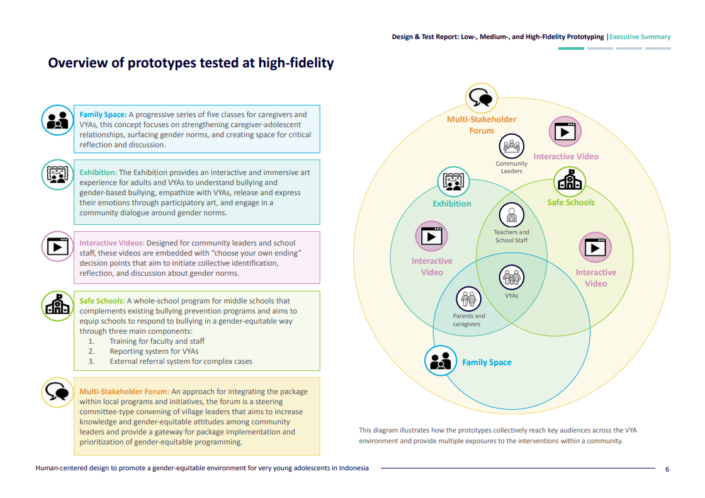
Leveraging HCD to Improve Gender-Equitable Adolescent Programming

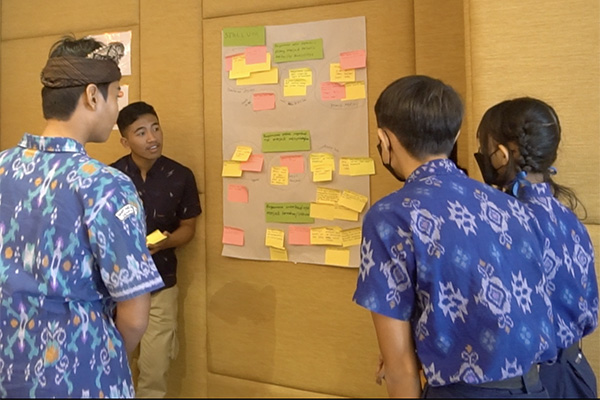
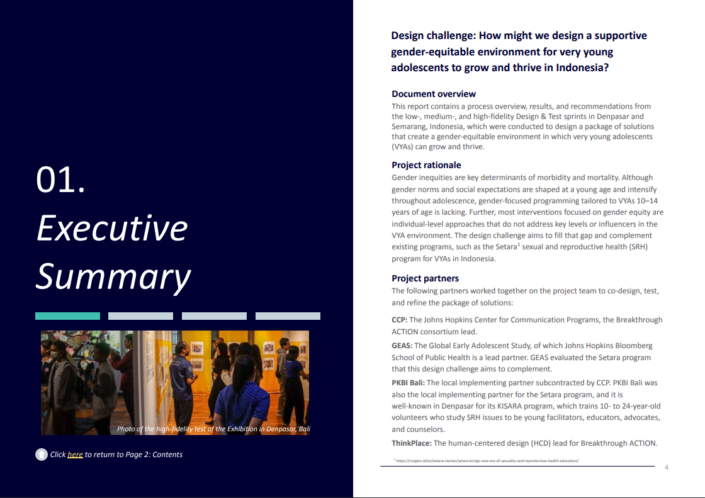
As part of Breakthrough ACTION’s efforts to advance innovative social and behavior change approaches for youth, the project applied human-centered design to develop gender-equitable interventions with very young adolescents in three of the Global Early Adolescent Study’s multi-year cohort sites: Kinshasa, in the Democratic Republic of the Congo, and Denpasar and Semarang, in Indonesia. HCD was selected as a methodology to allow for meaningful youth engagement in designing programs that shape their lives. Breakthrough ACTION produced several resources to document the human-centered design process, including a brief that outlines learnings from Indonesia and the Democratic Republic of the Congo [ Bahasa Indonesia | English | French ].

VYA Pilot Package

Source: Johns Hopkins Center for Communication Programs

Date of Publication: July 31, 2026

Using Human-Centered Design to Create a Gender-Equitable Environment for Very Young Adolescents

As part of Breakthrough ACTION’s efforts to advance innovative social and behavior change approaches for youth, the project applied human-centered design to develop gender-equitable interventions with very young adolescents in three of the Global Early Adolescent Study multi-year cohort sites: Kinshasa in the Democratic Republic of the Congo and Denpasar and Semarang in Indonesia. Human-centered design was selected as a methodology for meaningful youth engagement in designing programs that shape their lives.

Design and Test Reports

Breakthrough ACTION produced several materials to document the design process, including three design and test reports that detail the HCD activities conducted in Indonesia and the Democratic Republic of the Congo.

Indonesia
Democratic Republic of the Congo

BAHASA INDONESIA

Pendekatan Human-Centered Design untuk Membangun Lingkungan yang Mendukung Kesetaraan Gender bagi Remaja Sangat Muda di Indonesia [PDF]

Penerapan pendekatan HCD untuk penguatan program kesetaraan gender remaja di Republik Demokratik Kongo dan Indonesia [PDF]

Mengatasi Ketidaksetaraan Gender di Masa Remaja Awal di Indonesia: Implikasi untuk Program dan Kebijakan dari Proses HCD [PDF]

Membangun Lingkungan yang mendukung Kesetaraan Gender bagi Remaja Sangat Muda: Pesan dan Bukti untuk Meyakinkan Pembuat Keputusan [PDF]

ENGLISH

Design & Test Report: Indonesia [PDF]

Human-centered design to promote a gender-equitable environment for very young adolescents in Indonesia [PDF]

Design & Test Report: DRC [PDF]

Leveraging Human-Centered Design to Improve Gender-Equitable Adolescent Programming in the DRC and Indonesia [PDF]

Engaging Parents in SRH: Programs for VYAs in the DRC [PDF]

Addressing Gender Inequity during Early Adolescence in Indonesia: Implications for Programs and Policies from an Human-Centered Design Process [PDF]

Creating a Gender-Equitable Environment for VYAs: Messages and Evidence to Persuade Decision Makers [PDF]

EN FRANÇAIS

Tirer parti de la conception centrée sur l’humain pour améliorer la programmation équitable sur le plan du genre pour les adolescents en RDC et en Indonésie [PDF]

Engagement des parents dans la SSR : Programmes pour les très jeunes adolescents en la RDC [PDF]

Pilot Package

Source: Johns Hopkins Center for Communication Programs

Date of Publication: July 30, 2026

Gender Equity Today for Youth (GET 4 Youth) Pilot Package

The Gender Equity Today for Youth (GET 4 Youth) Pilot Package aims to create a gender-equitable environment in which very young adolescents (VYAs) (10–14 years old) can grow and thrive. The five interventions that comprise this package are designed to complement each other and reach key audiences in the VYA environment. Users can adapt and apply these interventions to other settings and contexts.

Companion Materials

Process Brief: This brief documents process challenges and lessons learned from low- and medium-fidelity co-design, prototyping, and testing activities in Indonesia and the Democratic Republic of the Congo. [ Bahasa Indonesia | English | French ]

Advocacy Briefs: These briefs offer policy and program recommendations based on learnings from activities in Indonesia and the Democratic Republic of the Congo.

  • Addressing gender inequity during early adolescence in Indonesia: Implications for programs and policies from a human-centered design process [ Bahasa Indonesia | English ]
  • Engaging parents in sexual and reproductive health: Programs for very young adolescents in the Democratic Republic of the Congo [ English | French ]

Message Framework: This message framework can be used by advocates working to increase funding for and improve the implementation of programs that seek to create a gender-equitable environment for VYAs. [ Bahasa Indonesia | English ]

PILOT PACKAGE RESOURCES

EDITABLE FILES

Frequently Asked Questions

The pilot package is currently available in English; it will be available in Bahasa Indonesia in early 2024.

This package was developed using a human-centered design (HCD) approach, meaning it was created alongside the intended audiences across multiple rounds of testing. These intended audiences include key influencers across the very young adolescent (VYA) environment, as well as potential implementers and facilitators. One round of testing was conducted in the Democratic Republic of the Congo. Learnings were taken from that project and then applied to three additional rounds of designing and testing across two sites in Indonesia: Denpasar and Semarang.

The actual amount will vary depending on location, but the itemized resources required for piloting or implementing are available in the GET 4 Youth Pilot Package.

This largely depends on the resources available to the piloting organization, as well as the size of the location or jurisdiction of the pilot. While there is no set period, organizations should plan for at least six months, with evaluation occurring during and immediately after. Evaluating the pilot could take an additional three months, depending on the size of the population reached.

While the package provides detailed adaptation guidance for each intervention, the best place to start is the Theory of Change (see pages 6–7 of the GET 4 Youth Package). The Theory of Change is rooted in the need to address gender norms. For example, if suicide and teen pregnancy are identified as the most salient issues related to VYA health and well-being in your community, your first task in adapting this package would be to link these topics and their corresponding outcomes to gender norms—what, if any, are the gender norms that are influencing these outcomes of interest?

This is such an important question and a critical reason why harmful gender norms are often not addressed. We learned through the design and test process that a critical first step is to level-set with people about what we mean when we say gender and gender norms; for this package, we simply are referring to the social expectations for boys and girls.

To that end, we created a customizable Overview Presentation within the Multi-Stakeholder Forum intervention that is designed to help level-set with audiences, specifically with public officials or government representatives who may be limited in what they can address.

It is important to note this package was designed with and for heterosexual, cisgender people due to the predominance of this relationship type and the legal and political context in Indonesia. Breakthrough ACTION recognizes this as an inherent limitation and encourages those who may adapt these materials for use in other contexts to include sexual and gender minorities in all aspects of the adaptation, implementation, and evaluation to ensure this package meets the needs of as many people as possible.

This is an important point, and particularly salient to one of the intended audiences for this project: low-income urban families. We recognize that in these settings, families often have competing priorities, especially if they have other children and the parents or caregivers work or take care of older relatives. This is why we made sure the family space includes whole families; though the material is largely intended for caregivers, all children in the family are welcome to participate. Additionally, building buy-in and support from community leaders through the Multi-Stakeholder Forum is intended to create an environment in which families receive positive reinforcement and resources to participate in the interventions.

Since facilitation is a very important component, detailed guidance and resources for facilitators are included in the GET 4 Youth Pilot Package. Please see the Facilitator Guide for detailed information, as well as the intervention-specific guidance within the package.

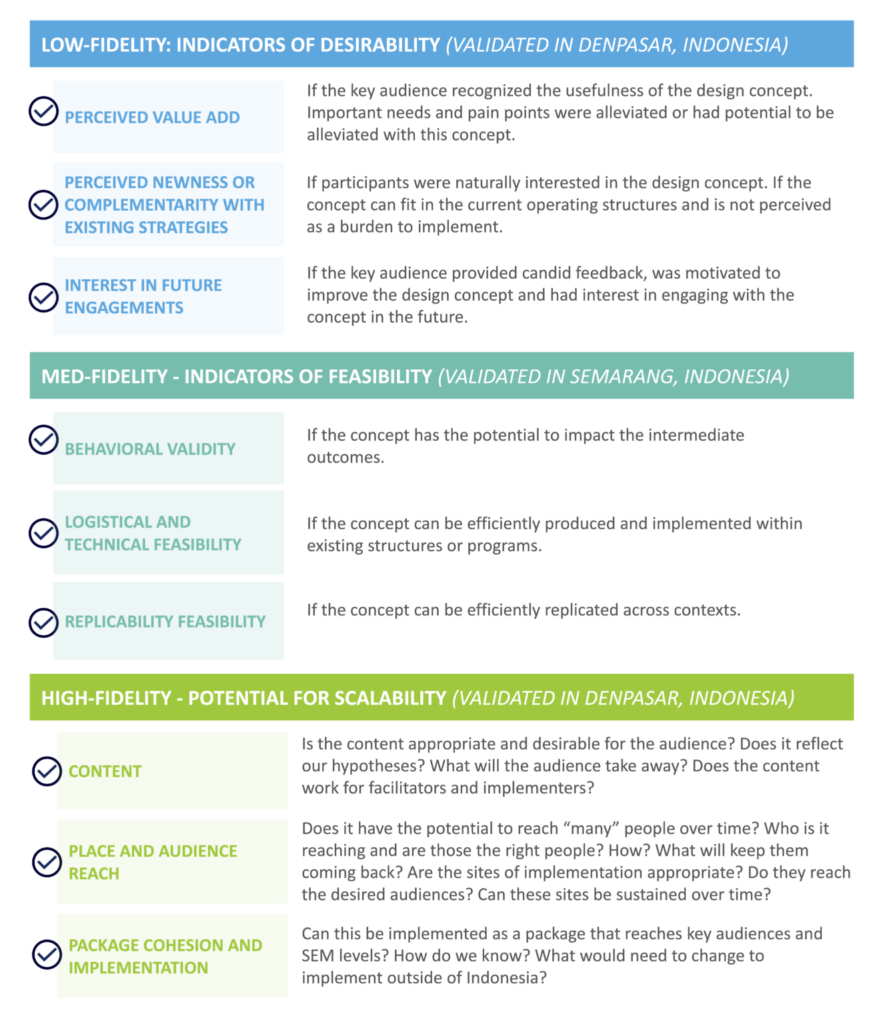
This is a pilot package that has not yet been piloted and, therefore, has not been evaluated. However, the process undertaken to develop this package incorporated the best practices of HCD and social and behavior change (SBC) to create a program with the greatest chance for success. The HCD process enabled us to refine and test prototypes across three rounds of testing, where we tested for desirability, feasibility, and the potential for scalability. See the graphic below for details about what was tested in each round. For more information about the design and test process and results, please see the Design & Test Reports.

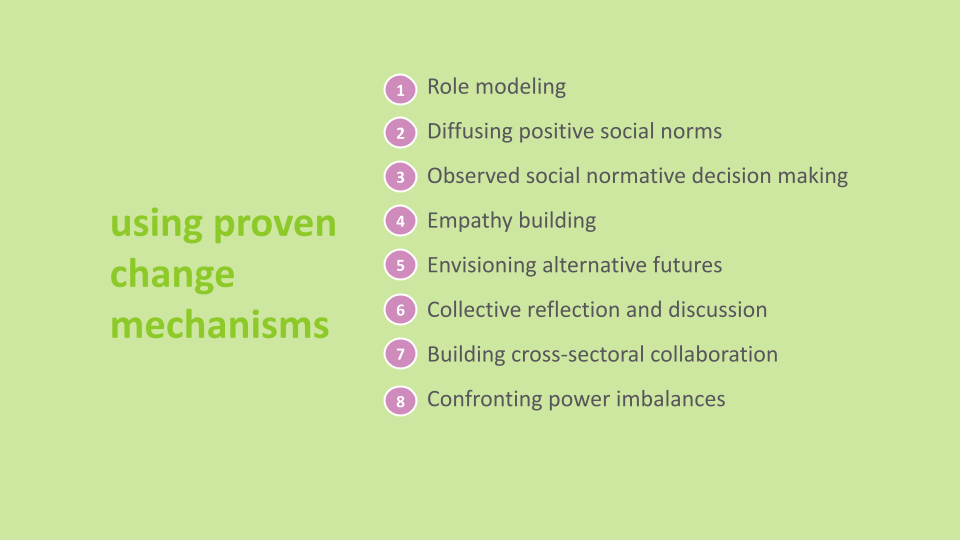
Additionally, we infused known SBC mechanisms into the interventions themselves. These are listed in the Theory of Change on page 6 of the intervention package.

We started knowing we needed a multi-level approach that addressed key influencers and systems in the VYA environment, based on evidence and lessons learned from the literature, Global Early Adolescent Study research, and previous programming for VYAs. With this in mind, we developed a series of “design challenges” for the low-fidelity co-design workshop that would lead to a package of interventions operating at multiple levels of the Socio-Ecological Model (see page 13 in the Design & Test Report: Low- and Medium-Fidelity Prototyping for the list of design challenges). We also worked with our intended audiences to understand which gender norms are most applicable to this population and issue (mental health and bullying). This was done by starting with the gender norms developed through formative research with 15 countries worldwide and identified as particularly salient to young adolescents. We then used co-design to identify which specific norms we should be targeting to shift to achieve our intended outcomes.
After the co-design workshop, our team developed these concepts into low-fidelity prototypes for testing. During this stage, the Core Design Team*—with expertise in gender, VYAs, and SBC—used what we know from theory, evidence, and past programming to inform prototype development. For example, the interactive video was designed to prompt collective reflection and discussion on gender norms, diffuse positive social norms, and create opportunities for observed social normative decision-making, while the family space fosters empathy building between caregivers and VYAs and employs role modeling to strengthen caregivers’ listening and communication skills.
These “change mechanisms” are a mix of evidence-informed strategies and best practices. You can find the full list of change mechanisms and our Theory of Change in the GET 4 Youth Pilot Package. You can find more information about the design process in our Design & Test Reports.
*The approach to ensuring human-centered co-design in this activity draws inspiration from the Four Voices of Design Model© created by ThinkPlace, the HCD lead for Breakthrough ACTION. The intention of leveraging this model is to suspend the power that comes from rank and ensure that all participants have equal power and the opportunity to contribute. Therefore, one of the first steps was to establish a Core Design Team: a multi-disciplinary group that coalesces the four voices of design—intent, design, experience, and expertise—and the necessary diversity of skills and experience to drive the design process. More information about the Core Design Team can be found on page 7 of the Design & Test Report: Low- and Medium-Fidelity Prototyping.

Source: Johns Hopkins Center for Communication Programs

Date of Publication: July 30, 2026

Very Young Adolescent Gender Equity: Messages and Evidence to Persuade Decision Makers

In 2022, Breakthrough ACTION conducted informal interviews with gender, sexual and reproductive health (SRH), and youth programming subject matter experts and with youth-led and youth-serving organizations seeking to improve gender equality for very young adolescents (VYAs). The purpose of these interviews was to understand the facilitators and barriers that influence the extent to which stakeholders support and prioritize gender-related policies and programs for VYAs.

The project also conducted a narrative review of publicly available information on gender norms and gender transformative interventions for VYAs, focusing on reports and results from the Global Early Adolescent Study, a multi-country longitudinal study exploring gender socialization and its implications for adolescent health and wellbeing. All of this information was synthesized and transferred into an operational message framework and validated with experts in SRH, gender, and youth.

About the Message Framework

The Creating a Gender-Equitable Environment for Very Young Adolescents: Messages and Evidence to Persuade Decision Makers [ Bahasa Indonesia | English ] is designed for advocates working to increase funding for—and improve the implementation of—programs that seek to create a gender-equitable environment for VYAs (aged 10–14). While gender equality among VYAs is a critical outcome on its own, it is also an important social determinant of health that can support improvements in a broad array of health outcomes, including SRH, violence prevention, mental health, and more.

The document provides a core set of key messages and recommendations that can and should be tailored to specific contexts and stakeholders. It is designed to be used as part of a strategic advocacy process, such as SMART Advocacy, particularly during the process of developing key “asks” and compiling supporting evidence. Users can adapt the messages provided to create advocacy materials, events, and campaigns supporting VYA gender equity.

VYA Pilot Package

Source: Johns Hopkins Center for Communication Programs

Date of Publication: July 30, 2026

Addressing Gender Inequity during Early Adolescence in Indonesia

Focusing on formative developmental windows, this technical brief outlines programmatic and policy implications for addressing gender inequity among very young adolescents ages 10 to 14 in Indonesia. The resource synthesizes evidence from a human-centered design process, illustrating how restrictive gender expectations take root during early puberty and impact mental health, education, and social development. It offers actionable recommendations for engaging families, addressing the intersection of gender and violence, and building cross-sectoral partnerships across education, health, and social services. Program managers, policy makers, and youth advocates can leverage these insights to design gender-transformative interventions tailored to young adolescents and their surrounding support networks.

Addressing Gender Inequity during Early Adolescence in Indonesia – Bahasa [PDF]

VYA Pilot Package

Source: Johns Hopkins Center for Communication Programs

Date of Publication: July 29, 2026

Social Media Rumour Bulletin

Internews works with Translators without Borders and other groups to collect and analyze rumors and misinformation related to COVID-19. Data is collected in six languages across Asia.

This bulletin relies on social media data collected by monitors working for Internews and partner organizations. Data is collected both manually and with the use of specialist monitoring platforms. The bulletin aims to provide tools and resources to help journalists and community workers to respond to misinformation they encounter in their work.

Last modified: July 15, 2021

Language: Bahasa Indonesian, Chinese, English, Tagalog, Thai, Urdu, Vietnamese

RESOURCES

Tools

Examples

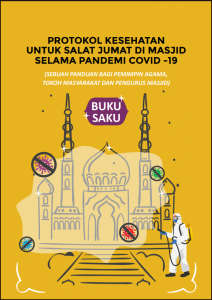
    Youth Leaders Mosque Materials

    This is a set of materials developed to provide Mosques with information and materials around COVID-19 prevention. Includes a short book, video, flyer, poster, and banner.

    Source: Johns Hopkins Center for Communication Programs

    Date of Publication: March 16, 2021

    COVID-19 Infographics, Indonesia

    These infographics are intended for the general public, and explain various aspects about dealing with COVID-19. Click on an image to see it larger.

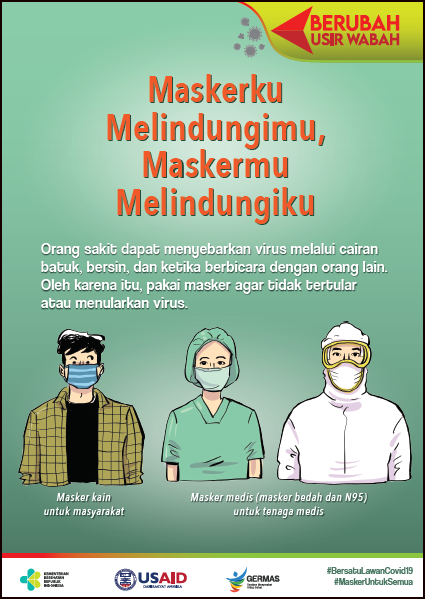
    Bijak Pakai Masker/Masker

    An Infographic about the importance of wearing mask as one of the three key behaviors in COVID-19 prevention
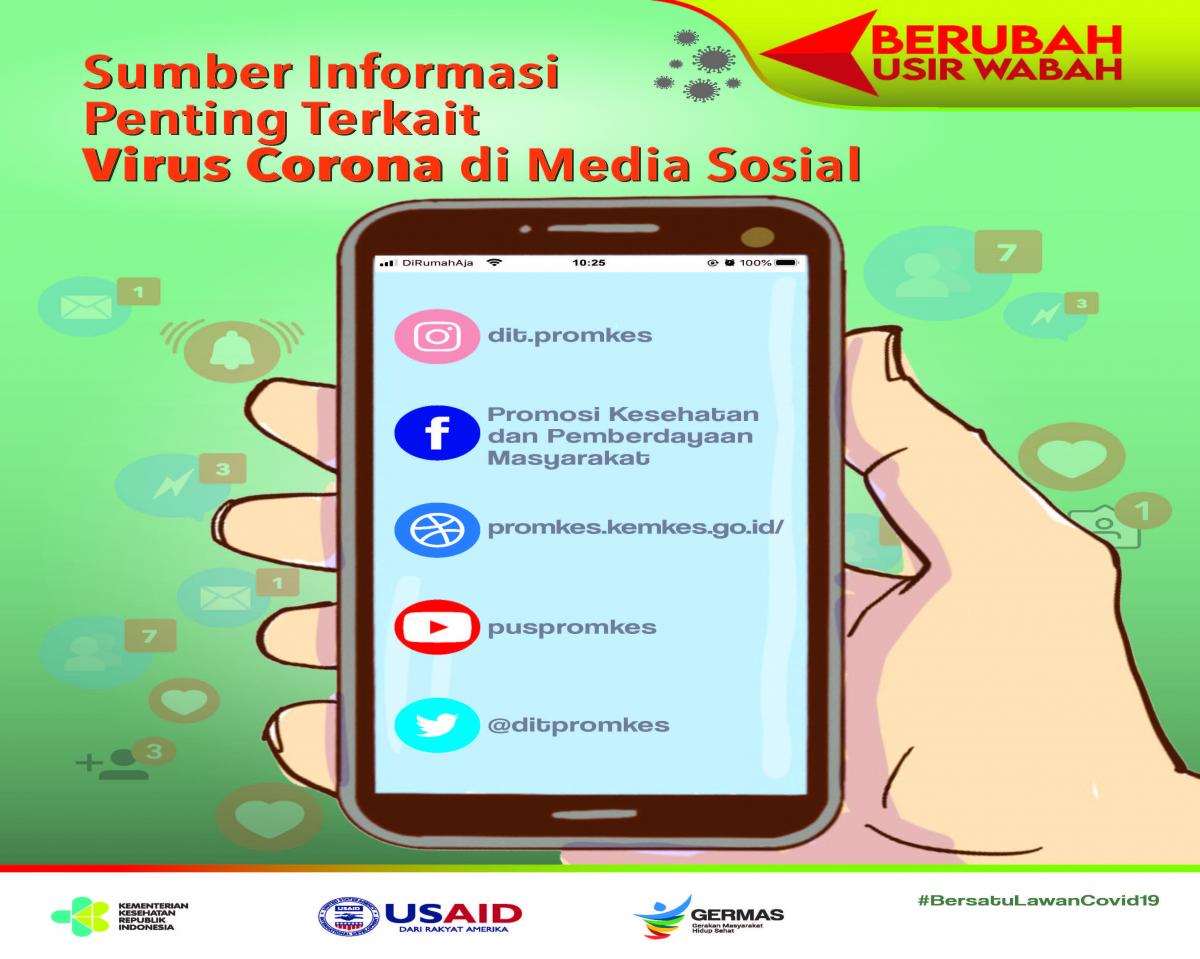
    Sumber Infomasi – Media Social (source of infomation – social media)

    An infographic about trusted sources of information related with COVID-19 on social media. These accounts belongs to the Directorate of Health Promotion and Community Empowerment Ministry of Health (Instagram, Twitter, Youtube, Facebook, and website)
    Jaga Jarak/Phyisical distancing

    An infographic about the importance of physical distancing as one of three key behaviors in COVID-19 prevention, including the examples of some activities that we usually did before the pandemic such as gathering, that is now forbidden/not recommended.

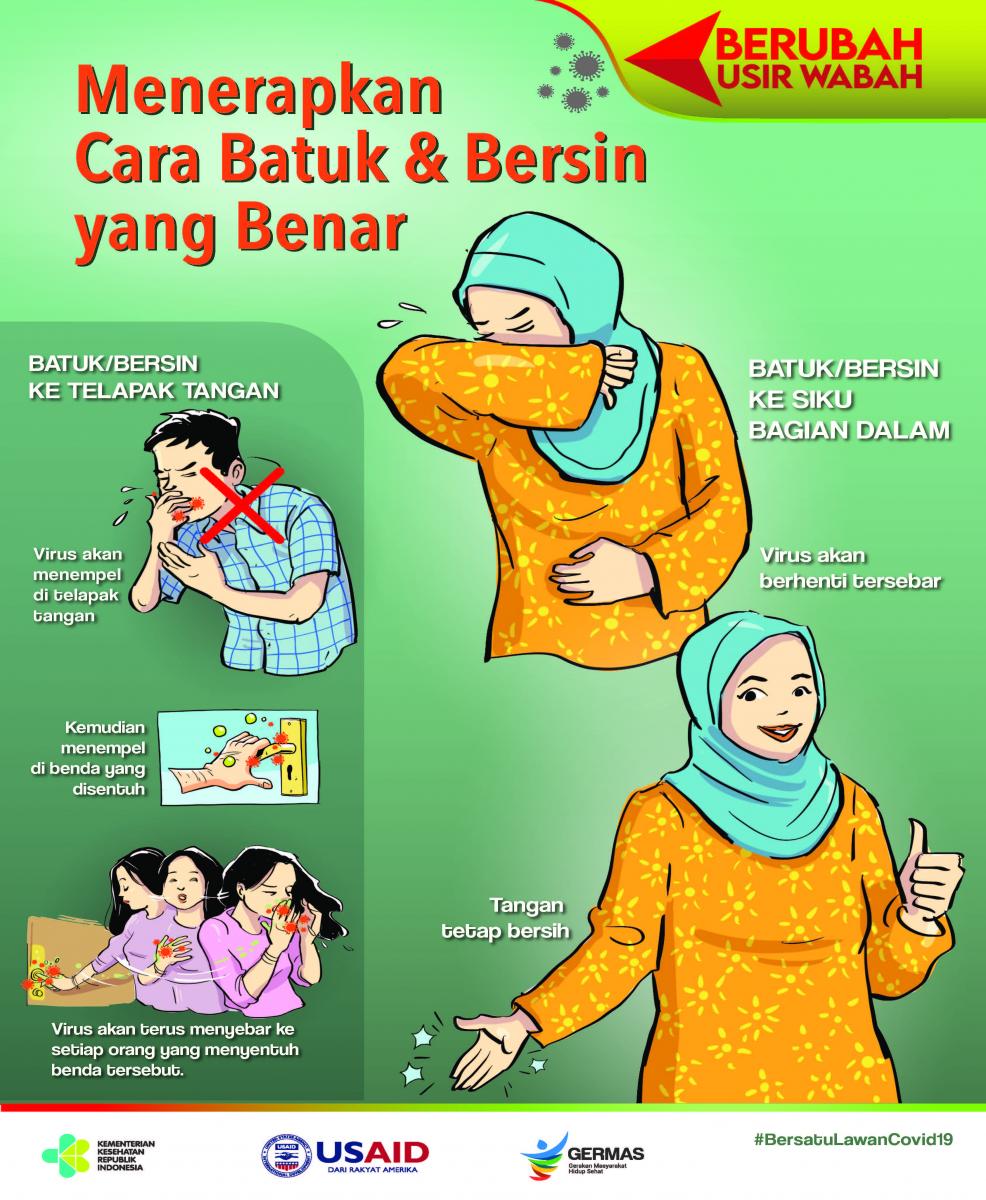
    Cara Batuk & Bersin/coughing

    An infographic on how to cough and sneeze properly in order to prevent the spread of COVID-19
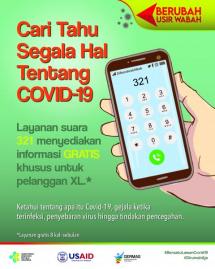
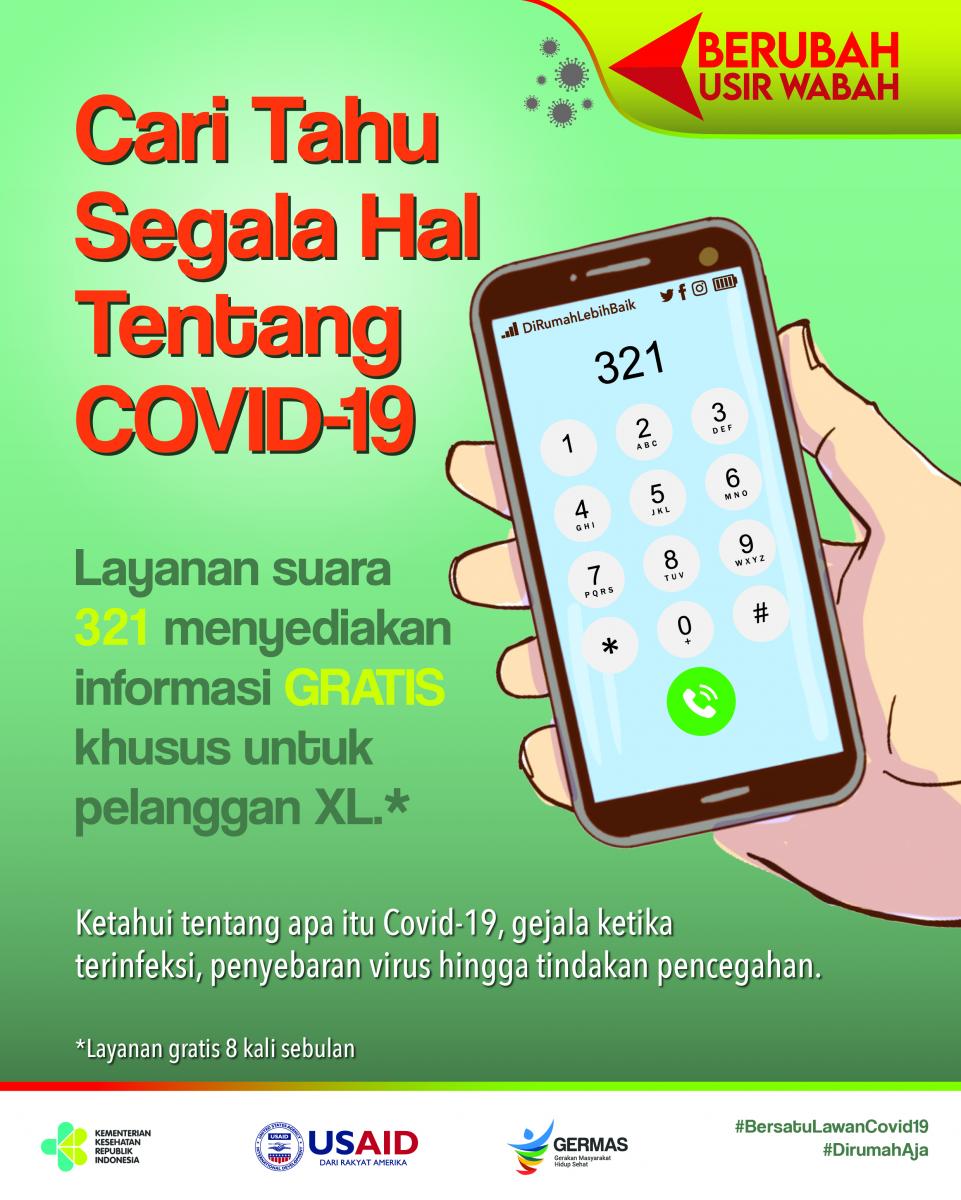
    Interactive Voice Response (IVR)

    An infographic about IVR service related with COVID-19. The menu consists of what is COVID-19, the spread and symptoms, and prevention. The IVR menu is updated regularly based on the latest update provided by the Ministry of Health.
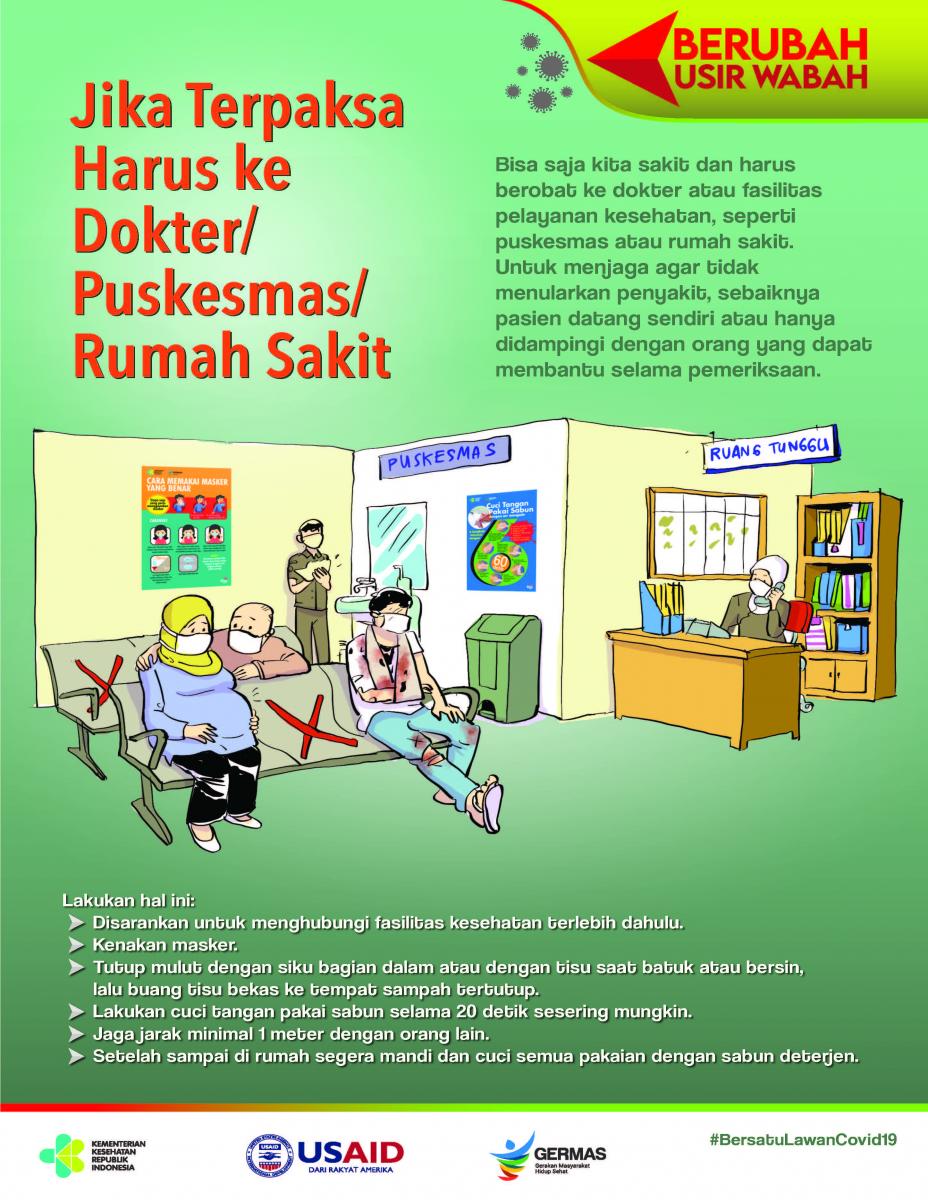
    Jika harus ke dokter/Faskes (visiting health service)

    An infographic about new health protocols related with COVID-19 when we visit health services
    Jika keluar rumah (if we have to go out)

    An infographic about health protocols related with COVID-19 (wearing mask, maintaining physical distancing, and have the handsanitizer ready) when we are out in the public.

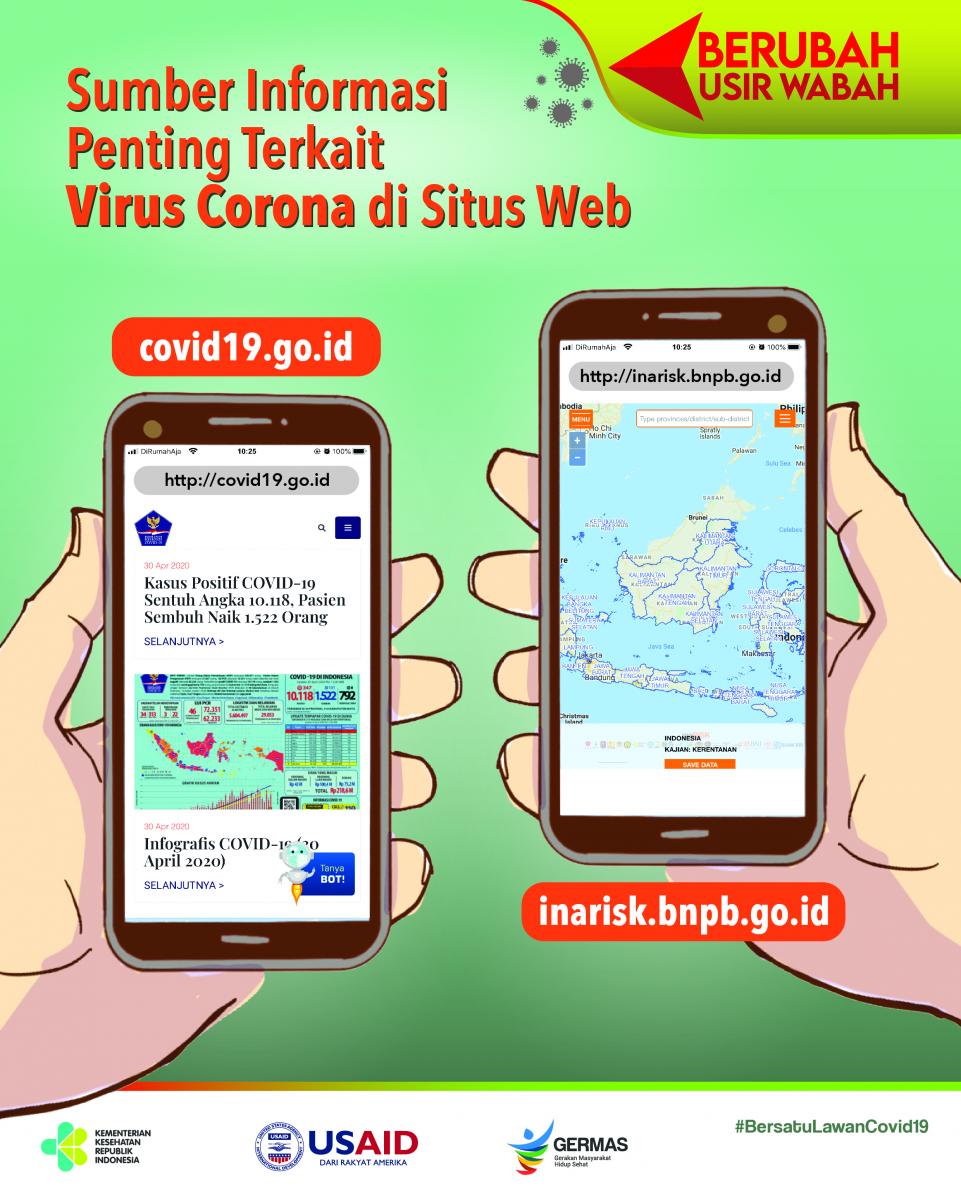
    Sumber Infomasi – Website – source of infomation – website

    An infographic about source of information – website. These websites are managed by the COVID-19 National Task Force.
    Cara Buat Masker Sendiri (how to make your own cloth mask)

    An infographic about how to make your own cloth mask

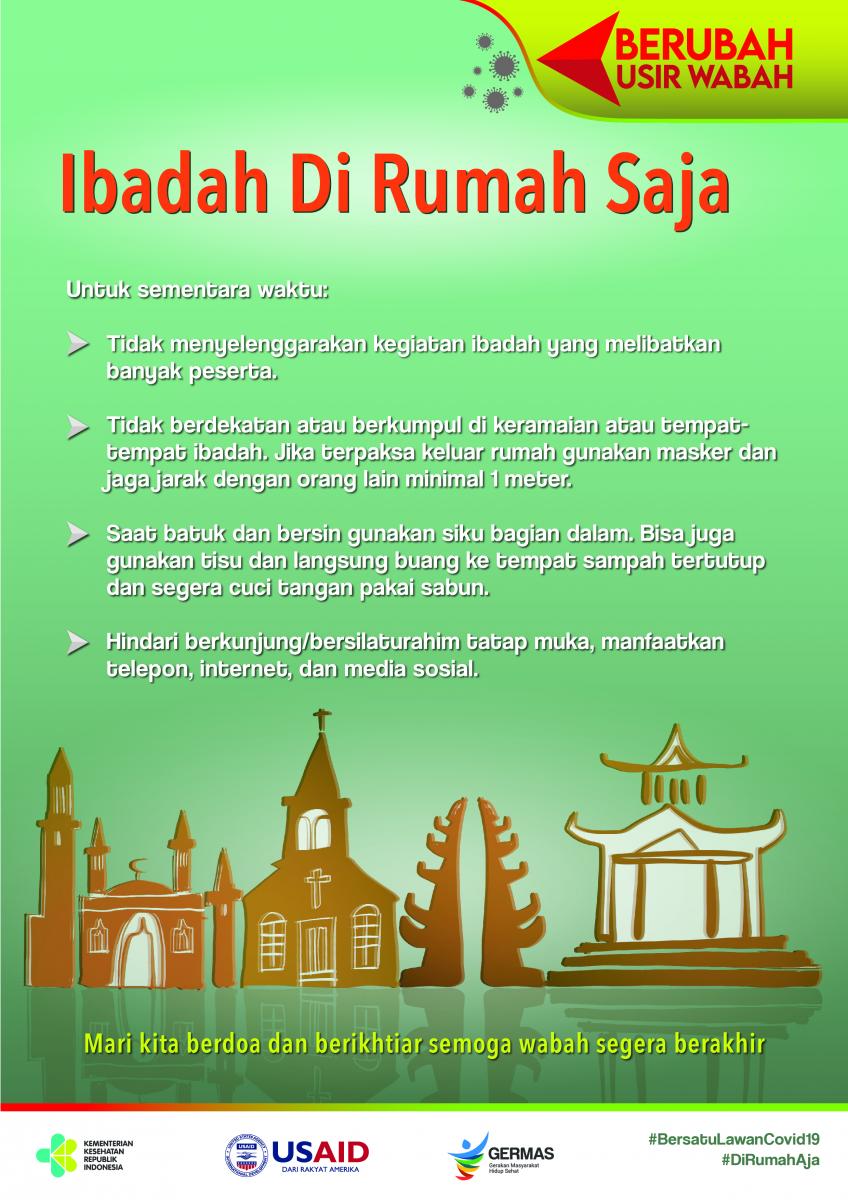
    Ibadah dari rumah (praying from home)

    An infographic about praying from home since most of the religious sites are closed due to COVID-19 especially related with maintaining physical distancing.
    Peran Nyata Tokoh Masyarakat (roles of community leaders)

    An infographic about the roles of community leaders in COVID-19 pandemic such as providing valid information to counter hoax, misinformation, and stigma

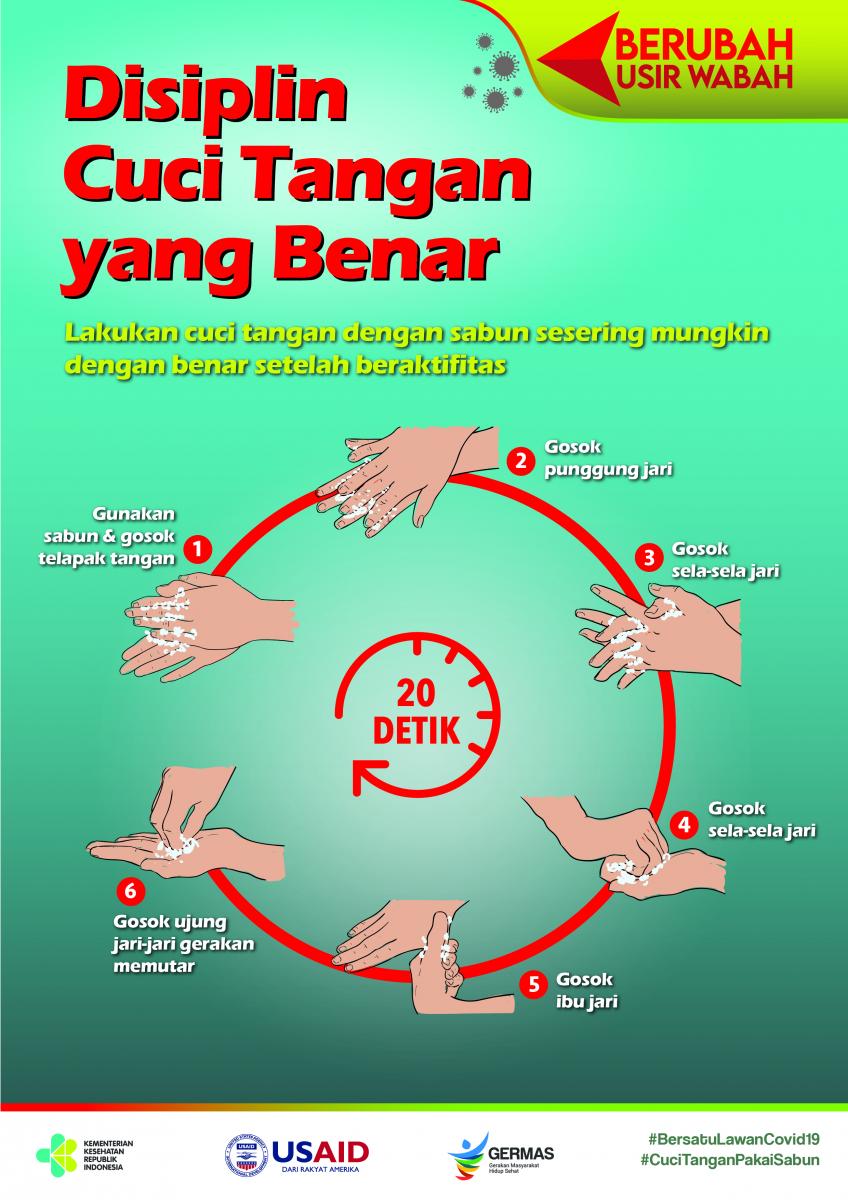
    Cuci Tangan Pakai Sabun (handwashing)

    An infographic about handwashing with soap as one of the three key behaviors in COVID-19 prevention, which also includes the steps in doing proper handwashing with soap.
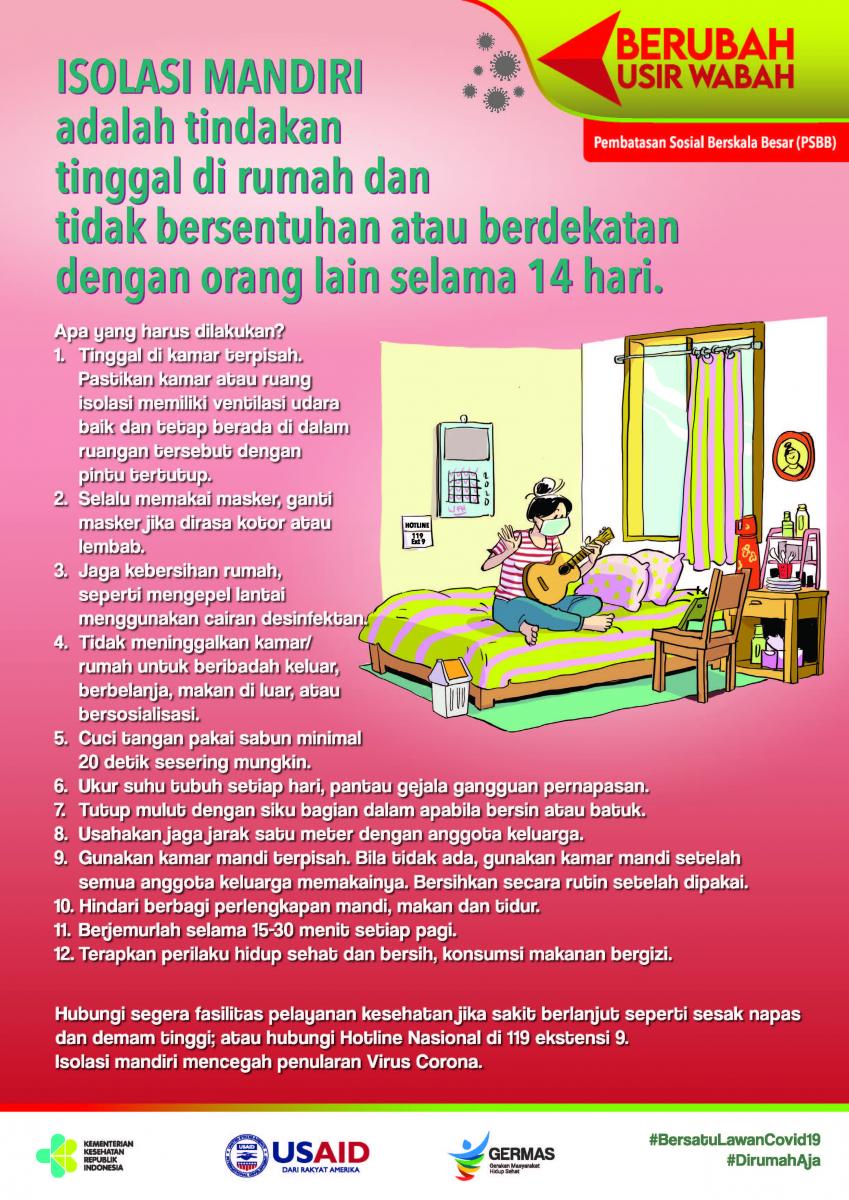
    Isolasi mandiri (self-isolation)

    An infographic about self-isolation; what do we need and can do during the 14 days of isolation.
    Jika sakit jangan panik (what to do when we are sick)

    An infographic about not panicking when we have similiar symptoms with COVID-19.

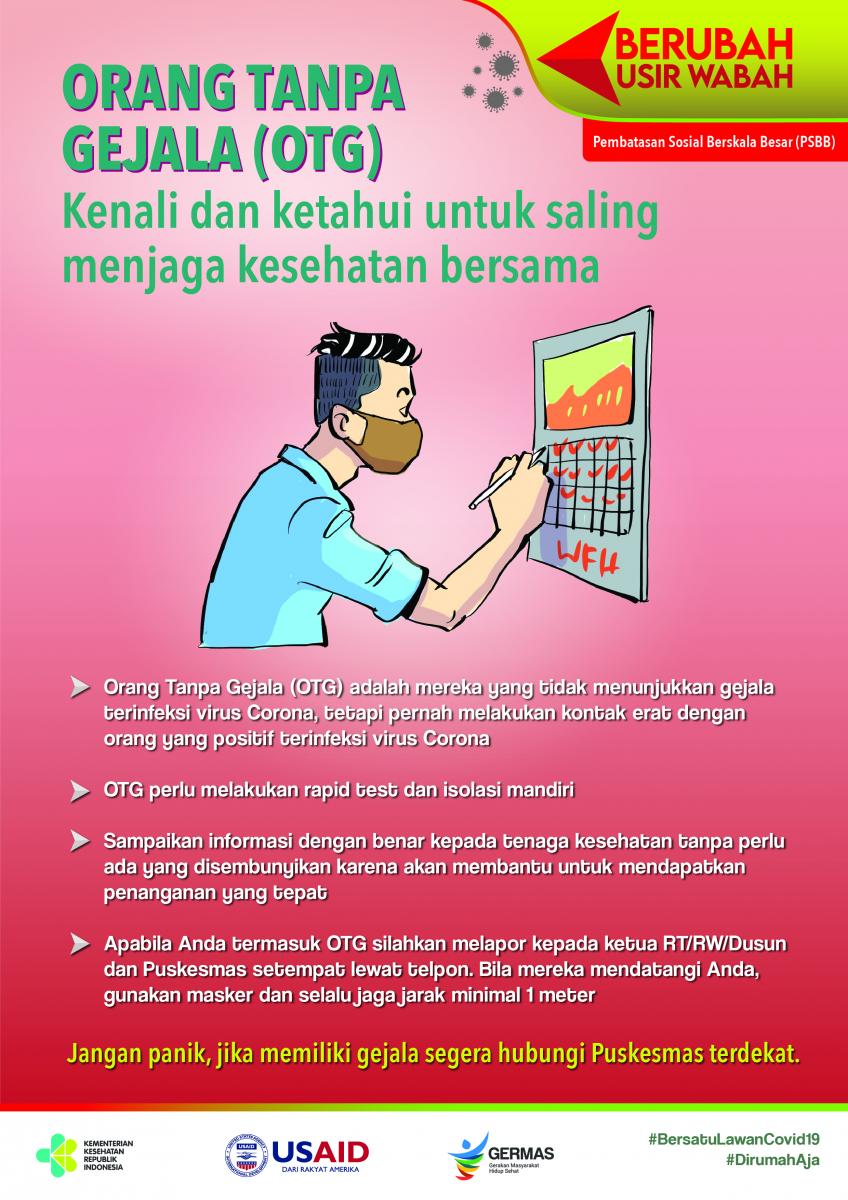
    Orang Tanpa Gejala/asymptomatic person

    An infographic about asymptomatic person, including the definition and what to do if you fall into this category
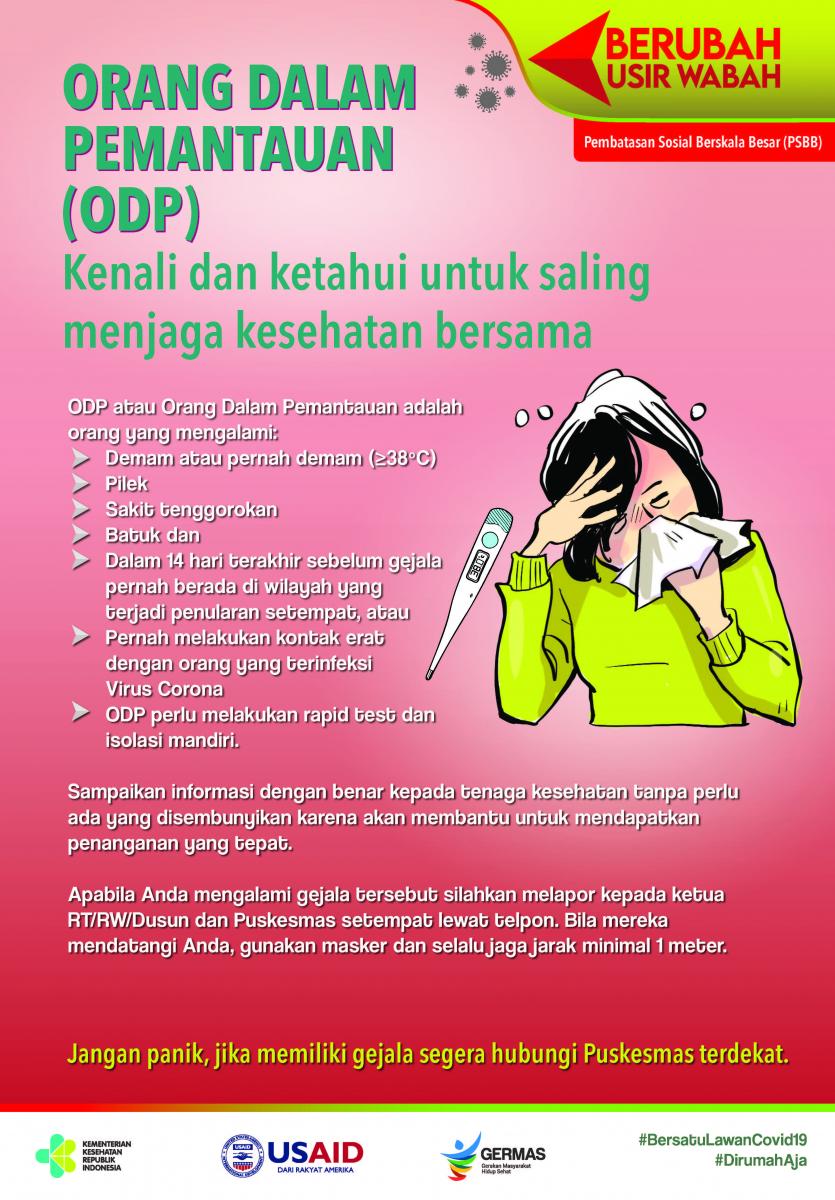
    Orang Dalam Pemantauan/Suspect

    An infographic about people who are suspected to get COVID-19 and what to do when you fall into this category
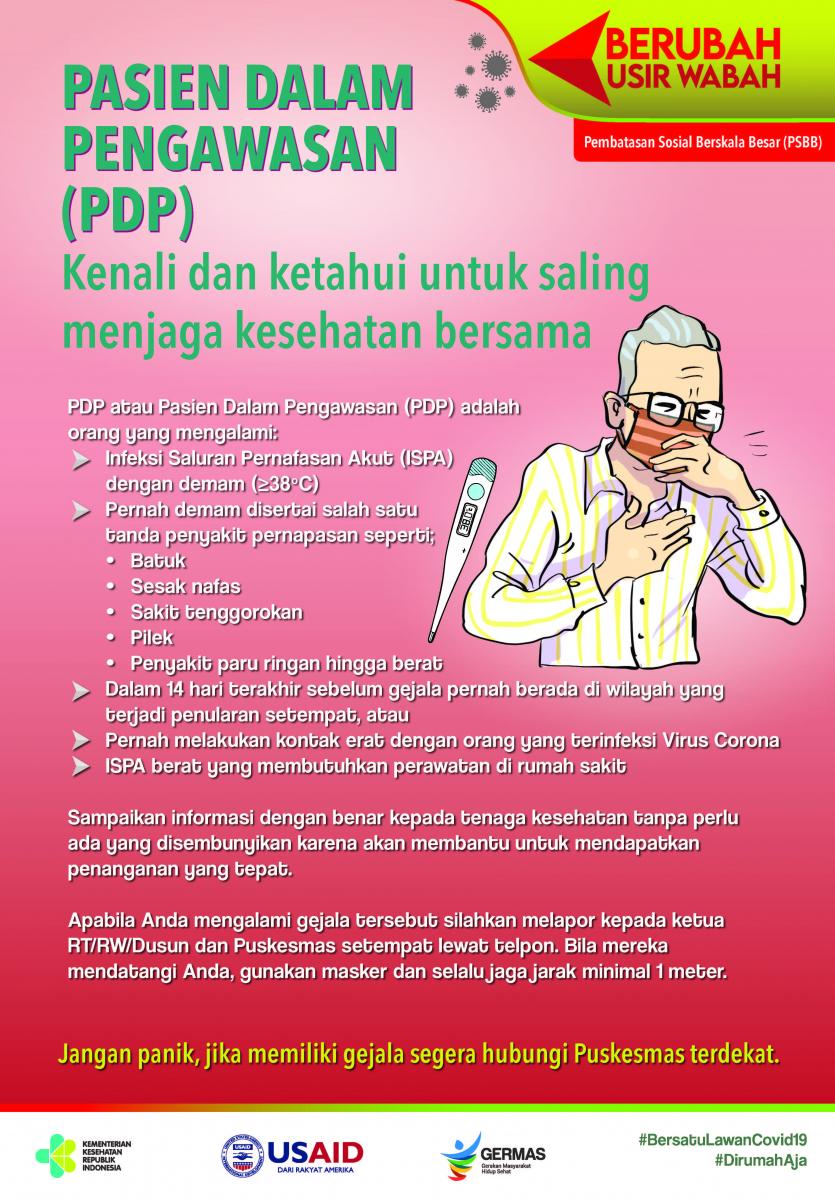
    Pasien Dalam Pemantauan/Confirmed case

    An infographic about people who are confirmed to have COVID-19 and the general symptoms of COVID-19
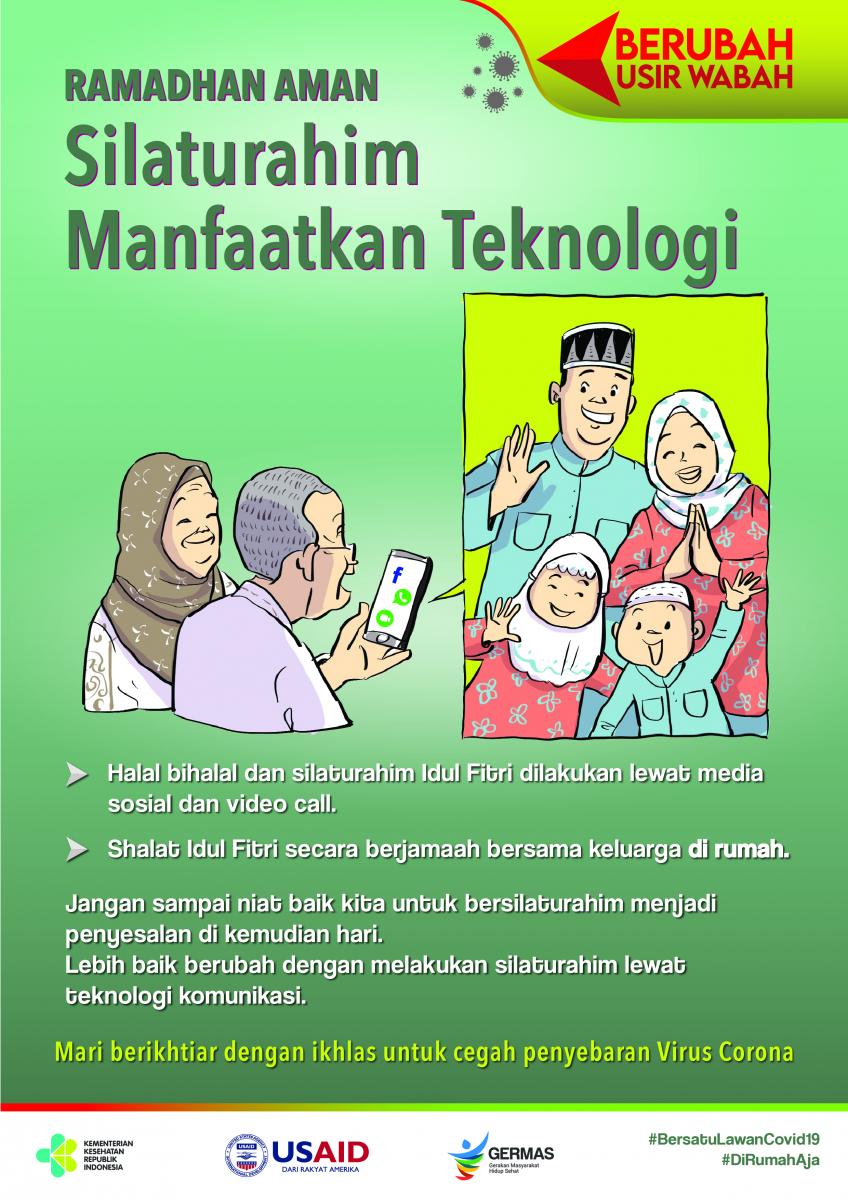
    Apa yang bisa dilakukan saat PSBB/Large Scale Social Restriction

    An infographic on what can we do during the large-scale social restriction including practicing the three key behaviors for COVID-19 prevention
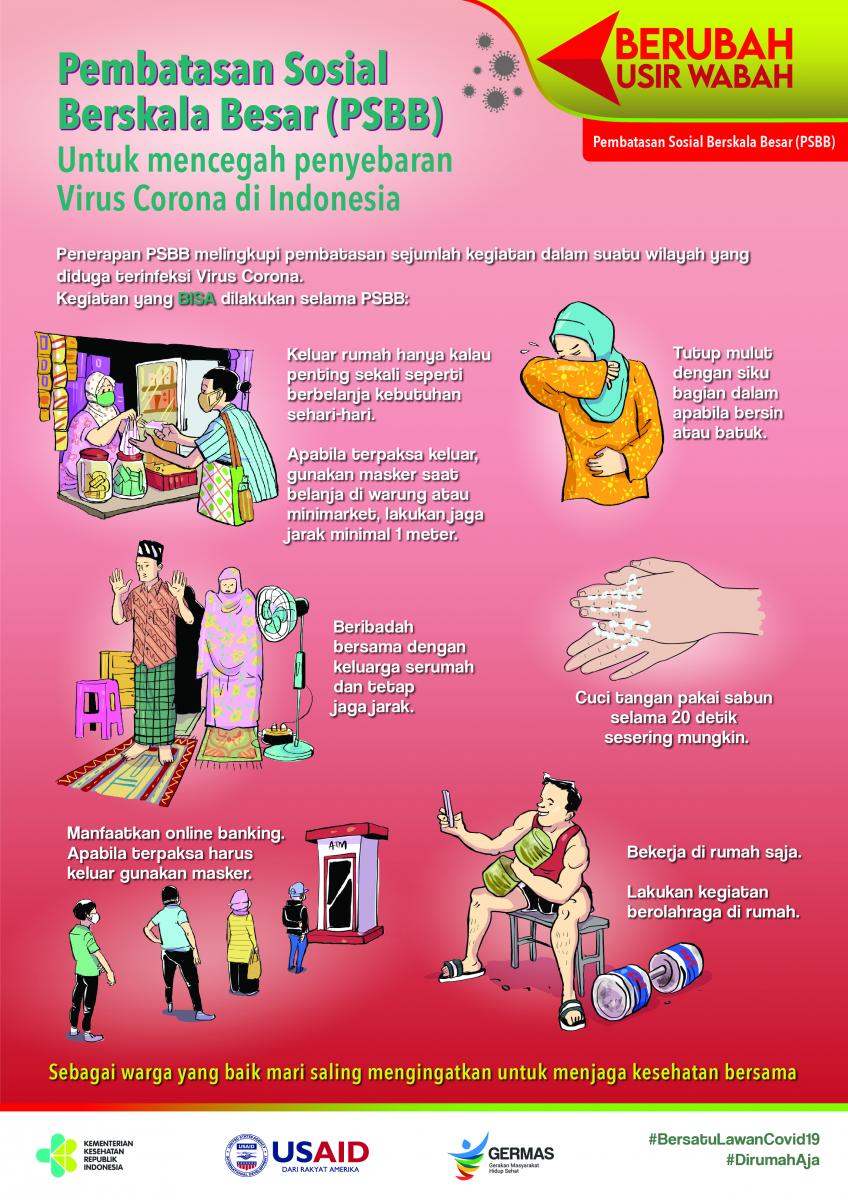
    Apa yang tidak boleh dilakukan saat PSBB/Large Scale Social Restriction

    An infographic about activities that are not recommended during the Large-Scale Social Restrictions including gathering, praying in religious sites, education in school, etc.
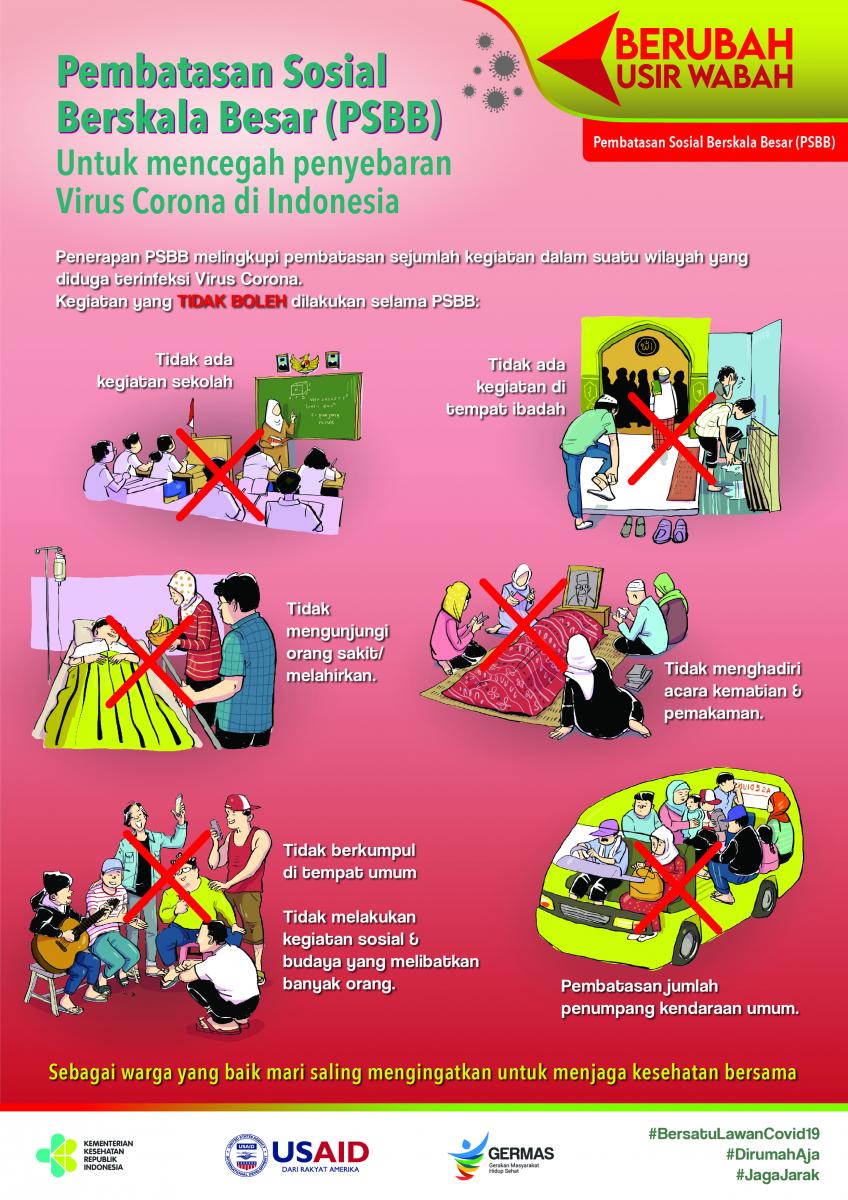
    Nutrisi Puasa/Nutrition during fasting month

    An infographic about maintaining good nutrition intake during fasting month in order to stay healthy during the COVID-19 pandemic
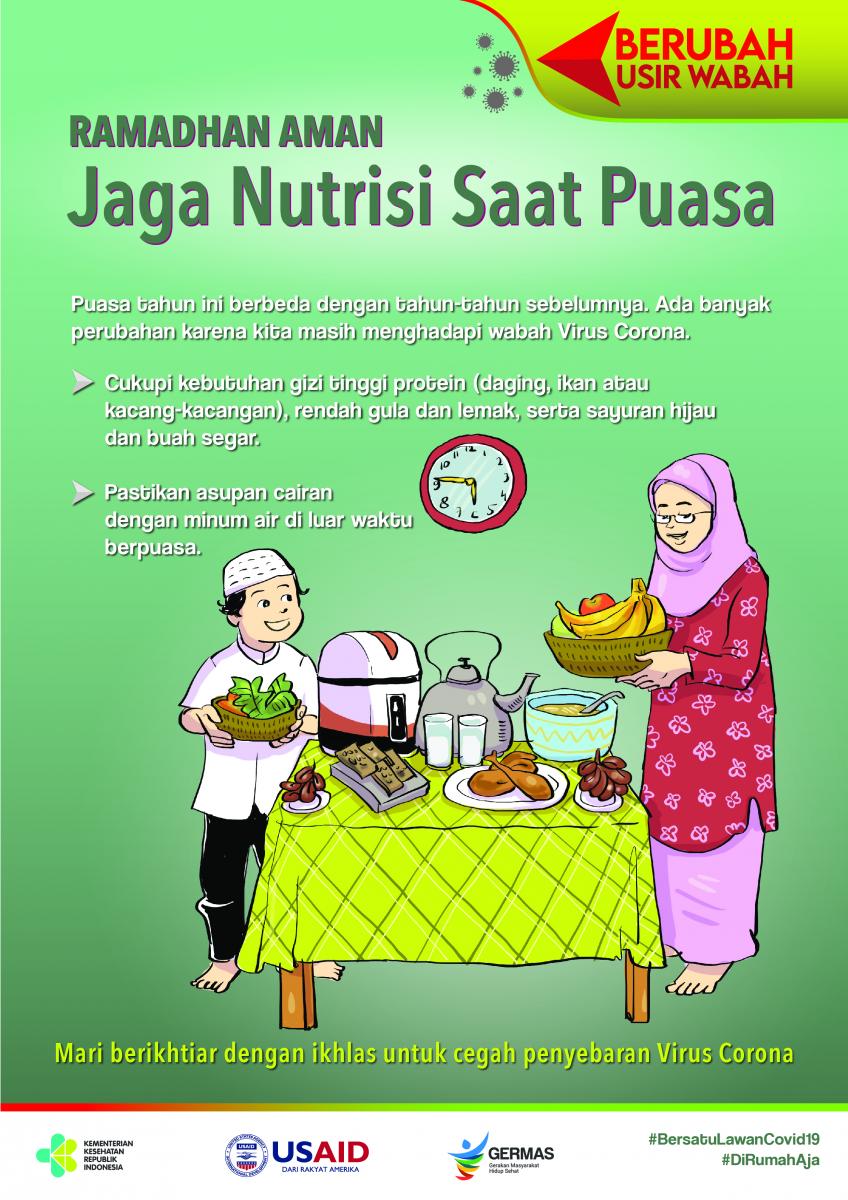
    Silaturahmi dengan Teknologi

    An infographic about the use of technology to meet families and friends (virtual meeting) especially during the fasting month and Eid holiday.
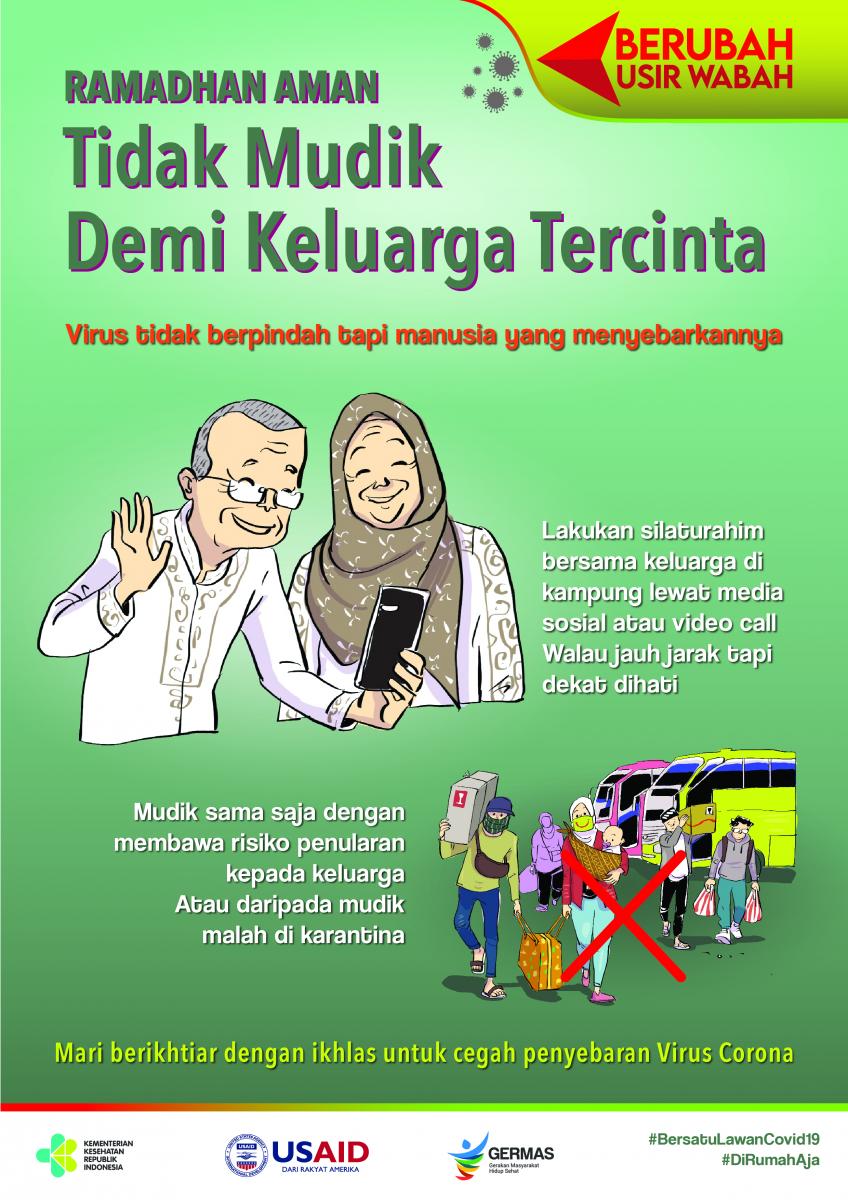
    Tidak Mudik

    An infographic about not visiting families in the village especially during the fasting and Eid Holiday. Visiting families in the village during fasting month and Eid holiday is considered as a yearly tradition for Indonesian people especially for the moslem.
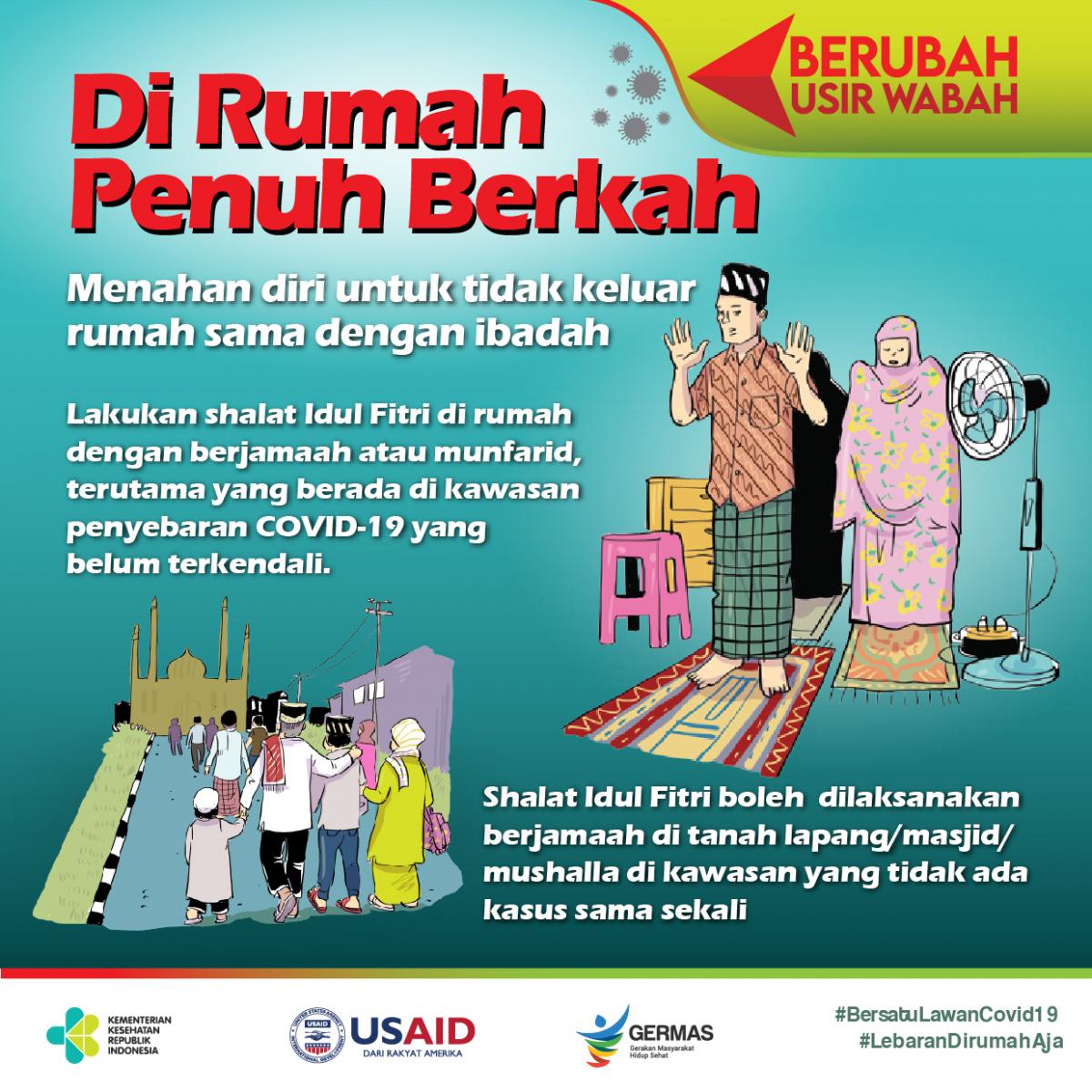
    Sholat Tarawih dan Sholat Ied

    An infographic about not conducting sholat tarawih (special prayer during fasting month) and sholat Ied (special prayer on Eid day) in public. It is recommended to do both prayer at home with limited number of people.
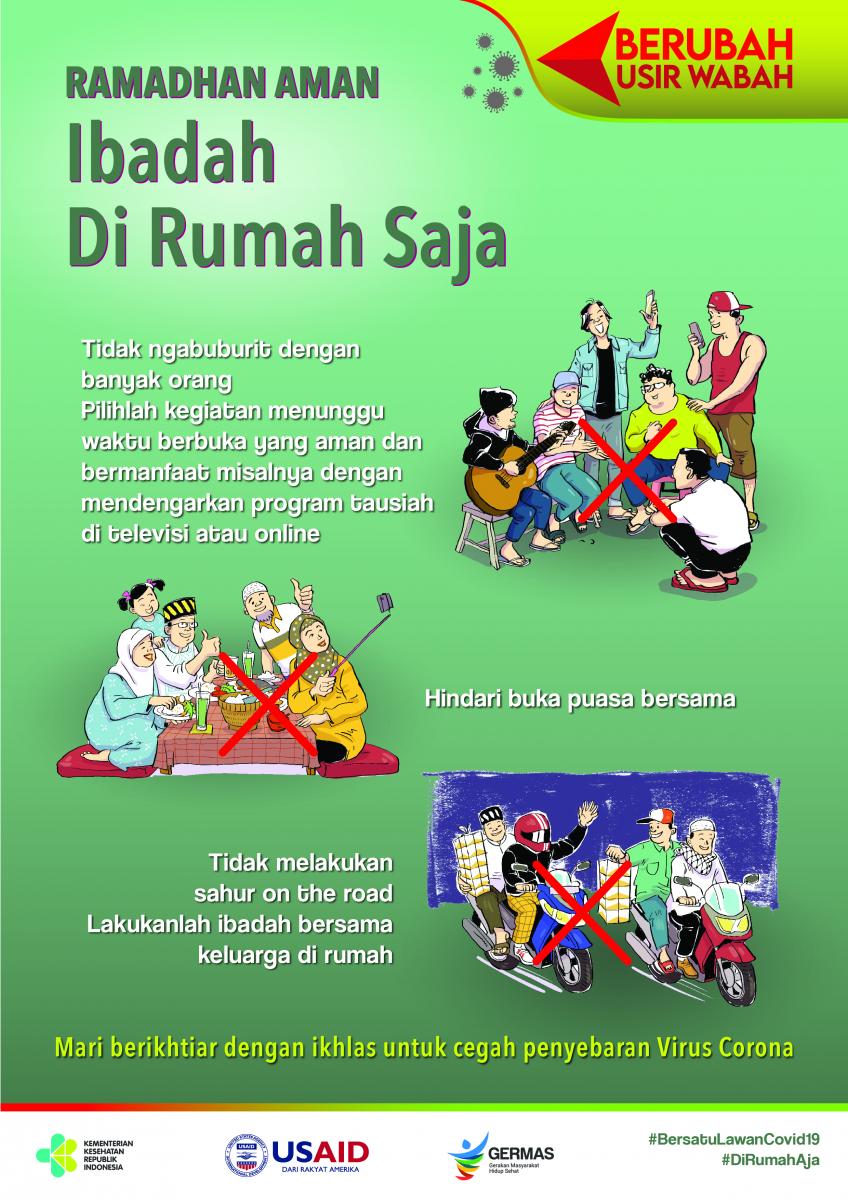
    Ramadhan di rumah saja

    An infographic about staying at home during fasting month. In Indonesia, it is tradition to get together for breaking the fasting each day. However, during the COVID-19 it is recommended not to do this kind of tradition, instead, it is better to break the fasting at home with family.
    This campaign includes radio spots, video spots, infographics, and a Question and Answer booklet.

    Source: Breakthrough ACTION/Johns Hopkins Center for Communication Programs

    Date of Publication: December 24, 2020

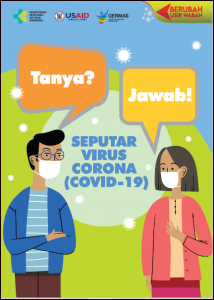
    Buku Tanya Jawab Seputar Virus Corona

    This book contains frequenty asked questions related with COVID-19.

    This campaign includes radio spots, video spots, infographics, and a Question and Answer booklet.

    Source: Breakthrough ACTION/Johns Hopkins Center for Communication Programs

    Date of Publication: December 22, 2020

    COVID-19 Radio Spots, Indonesia

    These radio spots are intended for the general public, and explain various aspects about dealing with COVID-19.

    Radio Spots

    • Adaptasi Kebiasaan Baru – Puskesmas – emphasizes the need to adapt to new habits in light of COVID-19 in Puskesmas, which is a community health facility.
    • Adaptasi Kebiasaan Baru – 3 Perilaku Kunci – promotes three key behaviors for COVID-19 prevention (handwashing with soap, wearing mask, and physical distancing)
    • Adaptasi Kebiasaan Baru – Peran warga desa – targeted the general public on community members’ involvement to prevent the spread of COVID-19
    • Jaga Jarak/Physical distancing – A radio spot about physical distancing that targeted the general public
    • Tunda Mudik – A radio spot about the recommendation of not visiting families in the village during the Eid holiday. In Indonesia, it is a tradition to visit families in the village (grandparents and relatives) during the Eid holiday and celebrate the Eid together.
    • Cuci Tangan Pakai Sabun/Handwashing – A radio spot about the importance of handwashing with soap and steps in doing handwashing in order to prevent the spread of COVID-19
    • Cara Batuk Bersin/Coughing – A radio spot targeted the general public that contains the information on how to cough and sneeze properly in order to prevent the spread of COVID-19
    • Masker/mask – A radio spot targeted the general public that contains the information on the importance of wearing mask in order to prevent the spread of COVID-19

    Radio Ad-Lib Briefs

    • Cuci Tangan Pakai Sabun/handwashing – A brief for radio ad-libs on handwashing with soap including the importance of handwashing with soap as one of three key behaviors in preventing the spread of COVID-19 and also the steps in washing hand with soap.
    • Jaga jarak/physical distancing – A brief for radio ad-libs on physical distancing including the importance of physical distancing as one of three key behaviors in preventing the spread of COVID-19.
    • Cara batuk & bersin/coughing – A brief for radio ad-libs on how to properly coughing and sneezing in order to prevent the spread of COVID-19
    • Tidak Mudik/phyisical distancing – A brief for radio ad-libs on not visiting families in the village during Eid holiday. This is also part of physical distancing behavior.
    • Stigma – A brief for radio ad-libs on stigma especially on the burial ceremony.
    • Masker/Mask – A brief for radio ad-libs on wearing mask as one of the three key behaviors in COVID-19 prevention. It also includes how to use mask properly.
    • Roles of Religious Leader – A brief for radio ad-libs targeted the religious leaders and their roles in COVID-19 prevention which includes providing valid information to counter hoax, misinfomation, and stigma since religious leaders are still considered as source of infomation for Indonesian.

    This campaign includes radio spots, video spots, infographics, and a Question and Answer booklet.

    Source: Breakthrough ACTION/Johns Hopkins Center for Communication Programs

    Date of Publication: December 22, 2020