Breakthrough ACTION-Nigeria Risk Communication and Community Engagement Tools and Resources

Breakthrough ACTION-Nigeria’s risk communication and community engagement interventions support the GoveBreakthrough ACTION-Nigeria’s risk communication and community engagement (RCCE) interventions support the Government of Nigeria in preventing, detecting, and responding to public health emergencies. As part of these efforts, the project:

  • Produced and implemented a coordinated package of social and behavior change interventions, including mass media campaigns and community-level activities tailored to address specific public health emergencies and infectious diseases like Lassa fever, mpox, and COVID-19.
  • Strengthened the capacity of government, partners, health care providers, and community leaders, as well as other community actors, to effectively communicate health messages and facilitate behavior change during public health emergencies.

Mass Media Campaign Television and Radio Spots

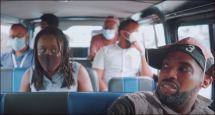
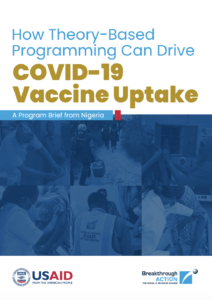
Television and radio spots from mass media campaigns aim to drive health messages and behavior change within communities around public health emergencies. They are designed based on theory and evidence and are relatable to the audience. Breakthrough ACTION-Nigeria designed and implemented two mass media campaigns to increase COVID-19 vaccine uptake.

Community Engagement Resources and Training Materials

These tools for community volunteers and religious leaders are used to encourage community members to adopt preventive measures and address misinformation related to infectious diseases like COVID-19, mpox, and Lassa fever.

One Health Risk Communication and Community Engagement Training Package

Health Care Workers

Health care workers are both an audience and communication channel for interventions due to their own risk for infection, trusted status, direct access to communities, and their potential influence on behavior change. Leveraging health care workers enhances the credibility and effectiveness of RCCE interventions in promoting health behaviors and facilitating behavior change within communities. Breakthrough ACTION-Nigeria developed a package of resources to:

Train health care workers in strengthening interpersonal communication with clients

Leverage peer-to-peer influence among health care workers to increase COVID-19 vaccine uptake

Learning Briefs and Blog Posts

Source: Johns Hopkins University Center for Communication Programs

Date of Publication: August 13, 2024
Social and Behavior Change to Increase Tuberculosis Care-Seeking in Nigeria: Tools and Resources

Breakthrough ACTION has developed and implemented social and behavior change (SBC) interventions to increase the number of tuberculosis (TB) cases identified in Nigeria. These resources can be adapted and used by professionals interested in using SBC approaches to address TB or practitioners implementing TB programs.

Check Am O! Campaign

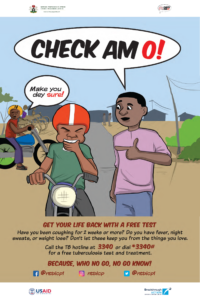
Breakthrough ACTION, the National Tuberculosis, Leprosy and Buruli Ulcer Control Programme (NTBLCP), and other partners in Nigeria developed the first national unified TB SBC campaign in the country. “Check Am O!” (Go and Check It!) was based on an intensive human-centered design approach and rolled out through multiple channels. The campaign encouraged anyone with a cough lasting more than two weeks to seek TB testing and for their families, friends, and acquaintances to support them in doing so.

Print Materials
TB TV Spots
TB-COVID-19 TV Spots

Job Aids for Health Care Workers

These job aids provide user-friendly guidance on TB care and treatment clinical management.

Guidelines and Reports

Implementation and Success Stories

Increasing Tuberculosis Case Notification in Nigeria: The Role of Social and Behavior Change

Source: Johns Hopkins University Center for Communication Programs

Date of Publication: August 13, 2024
Breakthrough ACTION Nigeria Malaria SBC Tools and Resources

In collaboration with the United States President’s Malaria Initiative, Breakthrough ACTION-Nigeria worked with the Nigeria National Malaria Elimination Programme (NMEP) and other partners to implement social and behavior change programs across a third of Nigeria’s 36 states and the Federal Capital Territory. Through community engagement, provider behavior change initiatives, and widespread media campaigns, Breakthrough ACTION-Nigeria and the NMEP ensured communities and healthcare workers were motivated to prevent, test, and accurately treat malaria. Through community engagement, provider behavior change initiatives, and widespread media campaigns, Breakthrough ACTION-Nigeria collaborated with NMEP to ensure that communities and healthcare workers are motivated to prevent, test, and accurately treat malaria. Here are resources developed by Breakthrough ACTION-Nigeria that can be used by others interested in leveraging the power of SBC into malaria programming.

Community-Based Stakeholder Job Aids

School-Based SBC Tools

Mama Put Campaign

Television Spots
Audio Spots

Malaria Radio Spots

Learning Briefs and Blog Posts

Source: Johns Hopkins Center for Communication Programs

Date of Publication: August 13, 2024
‘Protecting You, Protecting Us’ COVID-19 Campaign Materials, Guyana

Breakthrough ACTION Guyana’s ‘Protecting you, Protecting us’ COVID-19 campaign produced a set of materials to inform the public about protection from the virus and to bring to their attention other issues regarding COVID-19.

The materials include:

Radio Spots

TV Spots

  • Physical Distancing – addresses a common COVID-19 myth in Guyana that drinking wine can prevent COVID-19, and it also covers physical distancing. Includes Spanish subtitles
  • Wearing Masks – emphasizes wearing masks in public. It includes Spanish subtitles
  • Handwashing – promotes hand washing. It includes Spnaish substitiles

Posters

Source: Breakthrough ACTION/Johns Hopkins Center for Communication Programs

Date of Publication: August 9, 2021

Intersexions

The first season of this TV drama series comprises 26 episodes that examine how that which remains unsaid in love, relationships, and sex may place us at greatest risk of HIV infection. In the first season each of the episodes built on different characters forming a romantic or sexual link in a chain binding all South Africans. It focused on love, loss, heartbreak, joy, friendship, hatred, honesty and deceit. Believable characters acted out situations anyone could relate to, with each episode teasing you with what might come next.

The series was extensively supported through weekly discussions on 10 SABC radio stations, public relations to promote the show, a blog featuring weekly updates on the show, and social networking through Facebook and Twitter. Surveys were conducted by the Centre for AIDS Development, Research and Evaluation (CADRE), involving a post-broadcast, qualitative audience evaluation conducted in six provinces between April and June 2011. Results found that the viewers found the stories believable and relatable, and that the shows prompted discussions among viewers.

The show is the product of a collaborative partnership between SABC 1, SABC Education and Johns Hopkins Health and Education in SA (JHHESA). JHHESA interviewed over 2,000 people in 39 communities to understand their stories and their perceptions on current issues. It combined that research with a national communication survey of 10,000 people and fed the results to the Intersexions creative team.The show won 11 South African Television and Film Awards, a Peabody Award, and an Africomnet Best Mass Media Award 2012.

Source: Johns Hopkins Health and Education South Africa

Date of Publication: May 26, 2021