NURHI II

In the second phase of this project, 2015-2020, NURHI worked to contribute to achieving the national goal of increasing mCPR to 36% by 2018. Funded by the Bill and Melinda Gates Foundation and TJ Mather, its core partners included JHCCP, ARFH and CCPN, and its mandate was the scaling up, institutionalization and sustainability of the proven NURHI model to new geographies.

The primary outcome was a positive shift in family planning social norms at the structural, service, and community levels that drives increases in modern contraceptive use (CPR) in Kaduna, Lagos, and Oyo states.

Project materials from NURHI I and NURHI II are here.

Source: Bill and Melinda Gates Foundation

Date of Publication: October 7, 2020

Country Focus: Malawi

Malawi BRIDGE I and II

BRIDGE was designed to energize change in the way Malawians think and speak about HIV/AIDS and more importantly, in how they act.

BRIDGE is an acronym for:

  • Belief in a better future (hope)
  • Risk is shared by everyone (personalized risk)
  • I can STOP AIDS (personal responsibility, action, self-efficacy)
  • Discussion about HIV/AIDS (openness, destigmatization)
  • Gender equity (girls’ empowerment and changed men’s behavior)
  • Emphasizing the positive (action orientation, community assets, positive role modeling)

The project’s objectives were:

  • Increase the median age at first sex
  • Increase condom use by adults with non-r
  • Decrease unmarried youth 15-24 having sex in last 12 months
  • Decrease number of men reporting more than one sexual partner during the last 12 months
  • Increase condom use by unmarried youth

Support for Service Delivery Integration (SSDI)

In 2011, USAID Malawi awarded the five year, US $100 million Support for Service DeliveryIntegration (SSDI) Project, consisting of three separate, but interrelated Cooperative Agreements: SSDI-Services, SSDI-Systems and SSDI-Communication. SSDI Services works withthe Government to achieve improved service delivery; SSDI Systems to improve policies, management and leadership; and SSDI Communication to support social and behavior change communication (SBCC). SSDI-Communication was implemented by JHU/CCP in collaboration with Save the Children. SSDI-Communication developed and disseminated behavior change communication materials on 6six priority health areas- family planning and reproductive health, malaria, HIV/AIDS, maternal, neonatal and child health, nutrition, and WASH, all under the Moyo ndi Mpamba (Life is Precious) campaign.

Moyo ndi Mpamba Campaign

This campaign, the title of which means “Life is Precious, Take Care of It!” was part of the Support for Service Delivery Integration (SSDI)-Communication project, implemented by the Johns Hopkins Center for Communication Programs (CCP) and partners in Malawi from 2011-2016.

Other SSDI project materials here

Source: Johns Hopkins Center for Communication Programs

Date of Publication: October 7, 2020

Malawi SSDI Project Materials

In 2011, the Support for Service Delivery Integration (SSDI)-Communication was implemented by JHU/CCP in collaboration with Save the Children. SSDI-Communication developed and disseminated behavior change communication materials on 6six priority health areas- family planning and reproductive health, malaria, HIV/AIDS, maternal, neonatal and child health, nutrition, and WASH.

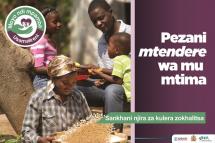
Family Planning Billboard

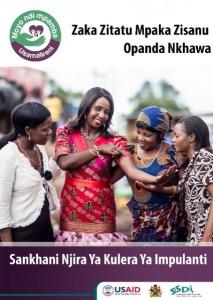
Family Planning Implant Poster

Net Use Billboard

Family Health booklet

Family Planning booklet

Music4Life AllStars Video

Source: Johns Hopkins Center for Communication Programs

Date of Publication: August 12, 2020

The Challenge Initiative, Nigeria

The Challenge Initiative (TCI) is a project led by the Bill & Melinda Gates Institute for Population and Reproductive Health, Johns Hopkins Bloomberg School of Public Health. The Initiative represents a new approach to providing life-saving reproductive health and family planning information and services to individuals, families, and communities, building on the demonstrated success of the Gates Foundation’s Urban Reproductive Health Initiative (URHI).

In Nigeria, the The Challenge Initiative (TCI) project supports 11 State systems and structures by coaching State government counterparts to transition from partner-led programming to State-led planning and implement high-impact interventions driven by data and evidence. The model helps State governments design, implement, and measure high-impact, cost-effective and scalable interventions delivered using home-grown approaches to expand access to quality and affordable family planning services.

Critical interventions include health systems governance, Family Planning (FP) and Adolescent and Youth Sexual and Reproductive Health (AYSRH) funding, and Primary Health Care (PHC) -FP coordination through advocacy, voice, and accountability; demand generation; improving capacity for delivery of quality family planning services.

Project materials can be found here.

Source: Bill and Melinda Gates Foundation

Date of Publication: August 10, 2020

Systems Strengthening Project – Nepal

Systems Strengthening

From 2018-2020, Breakthrough ACTION is implementing a USAID-funded social and behavior change (SBC) systems strengthening project in collaboration with the National Health Education Information and Communication Center (NHEICC) and Family Welfare Division (FWD).

The project assessed SBC capacity at the federal, provincial (Karnali Province) and project municipalities in Jumla and Surkhet. Based on the assessment findings, CCP worked closely with NHEICC, Karnali Ministry of Social Development (MoSD), Karnali Health Directorate (HD), and municipality elected representatives (executive committee) and health staff to address SBC capacity gaps through trainings, mentoring, practical, learning by doing activities.

Source: Breakthrough ACTION/Johns Hopkins Center for Communication Programs

Date of Publication: August 6, 2020

Health Communication Capacity Collaborative (HC3) Nepal

Between 2013 and 2017 CCP partnered with the Government of Nepal under the USAID-funded HC3 Nepal Project, with a focus on improving reproductive health outcomes among youth, adolescents, migrants and marginalized and disadvantaged groups through a targeted national family planning campaign.

This national-level project worked closely with NHEICC and the former Family Health Division in order to support a comprehensive, evidence-based campaign and advocacy among these groups. Nepal HC3 also developed the overall institutional and technical capacity of NHEICC through workshops and targeted technical assistance. The program worked diligently, developing high quality family planning communication materials and conducting community outreach activities

Three videos which describe the HC3 project are:

  • HC3 Nepal – Pratima’s Community: Join HC3 Peer Facilitator, Pratima Chaudhary, on her daily round of household visits in her Chitwan Tharu neighborhood. Through her conversations, we meet a variety of community members weighing health and family planning choices in light of their own circumstances. As a member of the community, Pratima is there to help.
  • HC3 Nepal – Towards a Brighter Future – A young woman and her migrant husband, who returned home immediately in the aftermath of Nepal’s major Earthquake of 2015, reflect on that memory, and on what is most important to both of them. Their dedication to each other and to the education of their 6yr old daughter form the basis for their next family decision.
  • HC3 Nepal – New Baby, New Parents – In “New Baby, New Parents,” we are introduced to a Kaski couple full of ideas and feelings about their new life as parents, ready to give the best care possible to their little one. They take action both to immunize their child, as well as to protect him and themselves against an early, unplanned pregnancy.

Source: Johns Hopkins Center for Communication Programs

Date of Publication: August 5, 2020

Nepal Program to Reduce Child, Early, and Forced Marriage (R-CEFM)

Breakthrough ACTION is an eight-year cooperative agreement from the United States Agency for International Development (USAID), to lead SBC programming around the world. Breakthrough ACTION is a partnership led by the Johns Hopkins Center for Communication Programs in collaboration with Save the Children, ThinkPlace, ideas42, Camber Collective, International Center for Research on Women, and Viamo.

USAID and Breakthrough ACTION Nepal’s Reducing Child, Early, and Forced Marriage (R-CEFM) project is an initiative implemented in Madhesh Province. The project is designed to strengthen the institutional and technical capacity of the Government of Nepal (GON) to design, implement, monitor, evaluate, and coordinate effective social and behavior change and child protection systems strengthening activities for R-CEFM. The project aims to address barriers related to child, early, and Forced Marriage through a community-based, multi-sectoral, and data-driven lens.

R-CEFM Activity Resources

Source: Breakthrough ACTION/Johns Hopkins Center for Communication Programs

Date of Publication: August 5, 2020

Breakthrough ACTION COVID-19 Indonesia

Breakthrough-ACTION activities in Indonesia will focus on providing assistance to the overall RCCE Coordinating Task Force to finalize strategy and develop the mapping of activities by themes and geographic areas.

Program activities include:

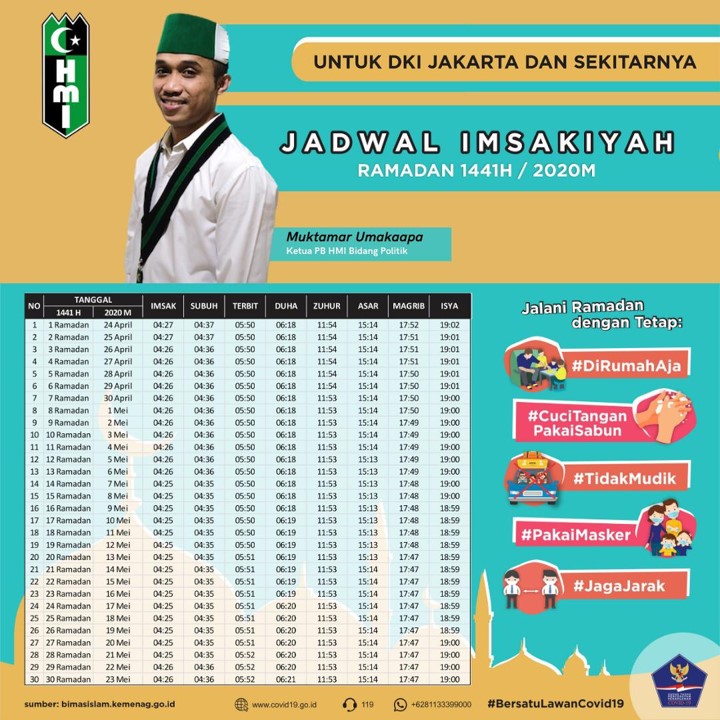
Working with religious leaders and Ramadan messaging

  • Youth Religious Leaders
    • Providing staff to support the National COVID-19 Task Force – focused on the public communication component.
    • One focus is the community channels – disseminating materials and messages coming out of the Task Force to community networks, mainly through online channels
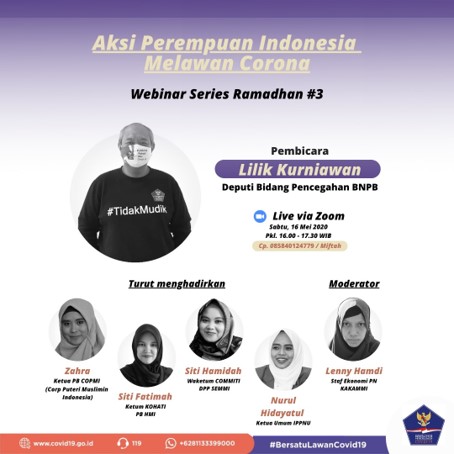
  • Indonesian Girls: Actions to Fight Corona Virus
    • Webinar for young women from the youth religious organizations: “Indonesian Girls Actions to Fight Corona Virus”
  • Social Media and Ramadan
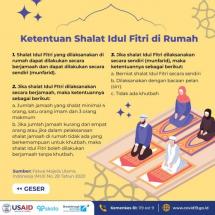
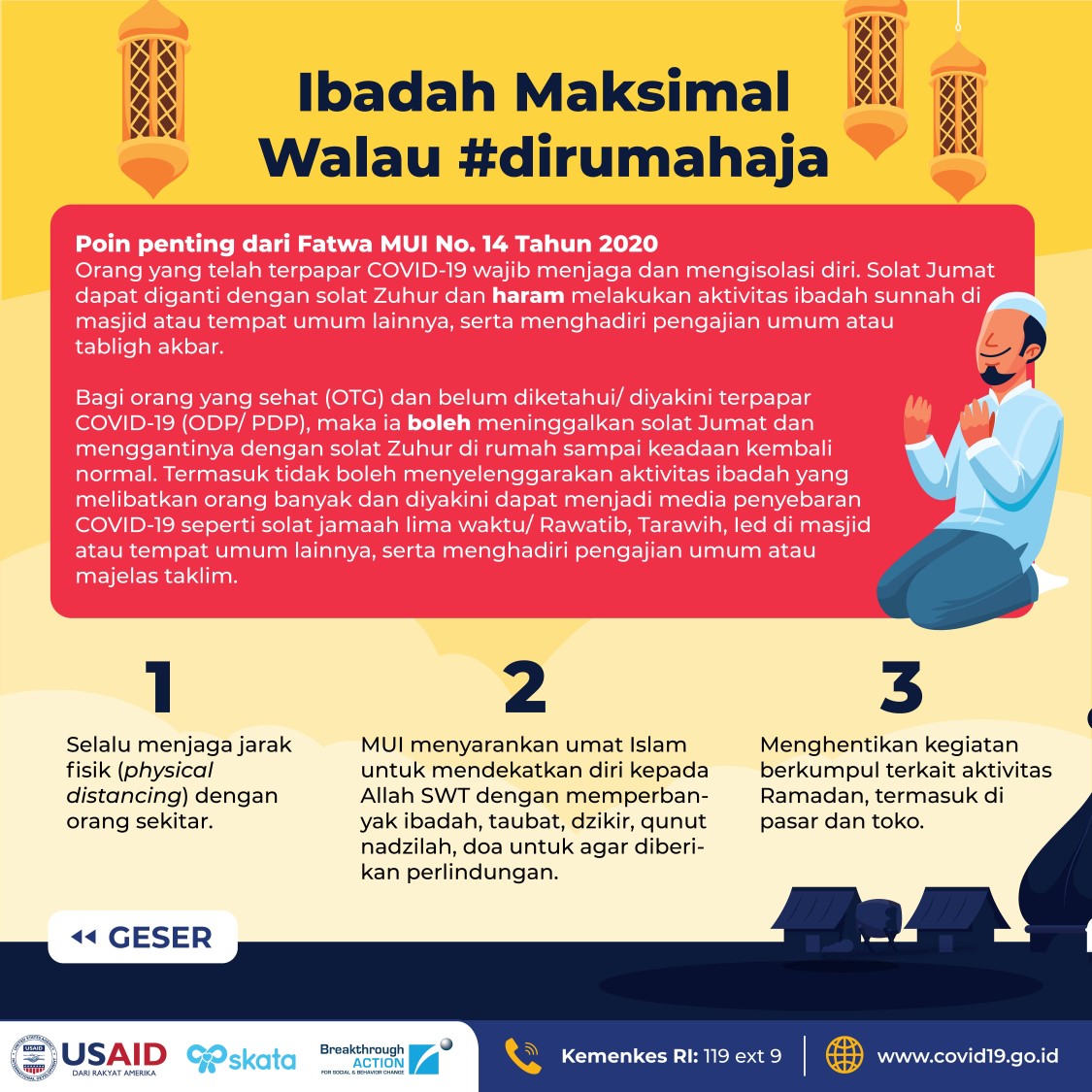
    • Praying at home for morning and evening prayers
    • Linking with the MUI’s fatwa on praying from home and not gathering at the Mosque or together for prayers
    • Steps to take – washing hands with soap, using your own prayer rug, etc.
    • Tips on fasting and when you shouldn’t fast

Source: Breakthrough ACTION/Johns Hopkins Center for Communication Programs

Date of Publication: July 21, 2020

Breakthrough ACTION Nigeria Wave 2- COVID-19 Spots

The second stream (Wave 2) audio spots as produced by Breakthrough ACTION-Nigeria in support of the Nigeria Centre for Disease Control’s Risk Communications response focused on preventive measures such as good hygiene and physical distancing as well as discouraging the sharing of fake news while promoting #Take Responsibility Campaign theme song.

The spots include:

English

Hausa

Igbo

Pidgin

Yoruba

Source: Breakthrough ACTION/Johns Hopkins Center for Communication Programs

Date of Publication: July 21, 2020