Community Health Worker Training Materials for Cholera Prevention and Control in Haiti

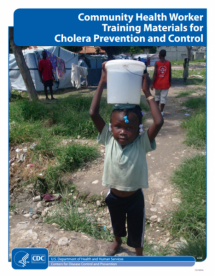
This training manual for cholera prevention and control is intended for community health workers (CHWs) to help their communities prevent cholera illnesses and deaths.

Its 13 modules provide information about community mobilization, cholera, taking care of people with watery diarrhea, handwashing, oral rehydration solution (ORS), safe drinking water (Aquatabs, Dlo Lavi, Gadyen Dlo, and PuR) preparation and storage, food preparation, sanitation and cleaning, handling a death that occurs at home, and preventing stigma associated with cholera. Community education cards, a guide for the cholera training modules, and PowerPoint presentations are also included. Though this manual is specific to Haiti, an English-language worldwide version can also be found at the CDC’s Training & Education page, under CDC Community Health Worker (CHW) Training Materials.

Source: Centers for Disease Control and Prevention

Date of Publication: March 25, 2019

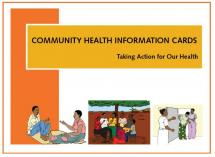
Community Health Information Cards

The overall objective of these cards, used in the Post Abortion Care project in Kenya, was to:

  • Increase awareness about family planning and postabortion care services to reduce illness and death related to complications of bleeding in the first half of pregnancy
  • Encourage community action to address these problems at the individual, household and community levels

Source: EngenderHealth

Date of Publication: March 25, 2019

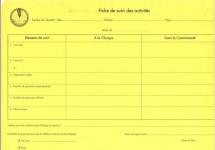
Cercle d’Or Fiche de Suivi des Activites [Gold Circle Activity Card]

This is a card used in the Gold Circle campaign in Africa, to track an individual health clinic site’s activities, such as visits, people referred to the clinic, and other information

Source: Johns Hopkins University Center for Communication Programs

Date of Publication: March 25, 2019

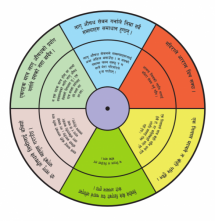
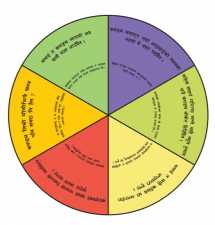
Alcohol Negotiation Wheel Game

This game is designed to enhance knowledge and skills for avoiding alcohol and drug use and to encourage knowledge, attitude and practice for not using alcohol and drugs.

It helps to build the capacity of beneficiaries to negotiate drugs and alcohol use for safer sexual behavior.

Source: USAID

Date of Publication: March 25, 2019