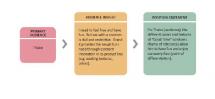
Good Times Condom Positioning Statement

This positioning statement summarizes how Good Time condoms are unique among other brands in the category in their ability to meet a young man (Thabo’s) key functional and emotional needs: “For Thabo, the different colors and textures of ‘Good Time’ condoms allow him to have fun and enjoy sex worry-free.”

Source: Popuation Services International

Date of Publication: March 25, 2019

Health Communication Component Endline Survey

The HCC Pakistan endline survey aimed to evaluate the extent to which the HCC program achieved its program objectives among the target population. Primary aims of the study were to estimate the effect of the HCC interventions on behavioral outcomes of interest, and compare outcomes among individuals exposed to the HCC messages and interventions with individuals who were not exposed to the HCC program.

The survey showed that higher proportions of women in the program districts were currently using contraceptives and especially modern methods of contraception. The participating women preferred, and commonly used, types of contraception designed for females rather than methods designed for the male. Discussions about FP with spouse, especially about birth spacing and limiting the number of children, also increased among participants in the HCC program area, and some women had initiated discussions on FP with their spouse. The HCC survey showed that high proportions of women participating in the study had positive intentions to wait at least three years between their last and next birth, to have a facility-based birth and a skilled birth attendant in attendance during delivery of their next child.

There was moderate exposure to the HCC Bright Star campaign and project-developed FP messages within the program target area. In addition, participant exposure to the HCC Bright Star program campaign and FP messages was associated with higher estimates for engaging in several desired key behavioral outcomes including approval of FP and birth spacing, approval of and use of modern contraception, engagement in spousal communication on FP, participantinitiated discussions on RH and MH-related issues, and intentions to use maternal care services in the future.

The HCC Pakistan project demonstrated that communication-focused individual- and community-level interventions have potential for promoting improved RMNCH outcomes through individual behavior change.

Source: Health Communication Component

Date of Publication: March 25, 2019

Health Communication Component Infographic Report

This report covers the Health Communication Component project in Pakistan, 2014-2017.

The project used evidence-based research, theoretical frameworks and innovative design to develop a high-impact, integrated health program.

The work actively addressed not only the immediate drivers and barriers to change, but also the contextual factors that determine health outcomes.

The project contributed to an enabling environment at the community level to foster health-seeking behaviors; designed and delivered an effective and coordinated SBCC package for individuals and households in Sindh, and built capacity to improve design, implementation, monitoring and evaluation of high-quality SBCC.

Source: Health Communication Component

Date of Publication: March 25, 2019

Health Communication Component, Pakistan – Project Documentaries

This page provides a series of documentaries produced as part of the Pakistan Health Communication Component project, 2014-2018.

The documentaries include:

  • Bright Lives – demonstrates the efforts and impact of USAID-funded Health Communication Component (HCC).
  • ‘Sammi’ – narrates the entire story of the USAID-funded Health Communication Component (HCC)’s entertainment-education drama ‘Sammi’ in a visually appealing manner. The narrative is told in the words of the lead cast, director and the technical lead. The English-language short documentary also covers development, delivery and impact of the drama serial ‘Sammi’.
  • Pakistan’s First Urban Family Planning Project – provides an introduction to ‘Sukh Initiative’ a family planning project (2013 – 2018) implemented in Karachi and highlights its key interventions to building a holistic health eco-system aimed at increasing modern contraceptive use by 15 percentage points.
  • Headline -speaks to the larger media community in Pakistan, and more specifically to media managers, senior journalists, and editors, to build their knowledge on population and family planning issues and also highlight reasons why this remains an underreported subject.
  • Call to Life – based on the intervention that engaged Muslim scholars across Pakistan for promoting mother and child health. It gives a detailed insight into the entire activity. It comprises brief statements by Muslim scholars, representing different Islamic sects, on the issue of mother and child health and success of the intervention.
  • Mohabbatein (Love Story) – focusing on factors leading to poor maternal health. It presents compelling information in a dramatic way, linking the timeless love story of the Mughal Emperor Shahjahan, who lost his wife Mumtaz Mahal while she delivered her 14th child, and issues of maternal and newborn health in Pakistan today.

Source: USAID, Johns Hopkins Center for Communication Programs

Date of Publication: March 25, 2019

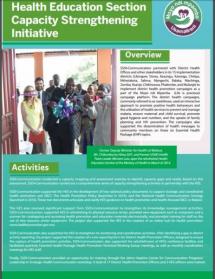
Health Education Section Capacity Strengthening Initiative

This fact sheet explains the capacity strengthening initiative of the Moyo ndi Mpamba campaign. In this initiative, SSDI-Communication conducted a capacity mapping and assessment exercise to identify capacity gaps and needs. Based on this assessment, SSDI-Communication carried out a comprehensive series of capacity strengthening activities in partnership with the Health Education Section (HES).

SSDI-Communication supported the HES in the development of two national policy documents to support strategic and coordinated health promotion and SBCC: The Health Promotion Policy (launched in 2014), and the National Health Communication Strategy (launched in 2016). These two documents articulate and clarify HES guidance on health promotion and health-focused SBCC in Malawi.

Achievements included:

  • 23 HES staff trained in Leadership in Strategic Health Communication
  • HES conference facilities, physical resource center, and recording studio refurbished
  • Online hub for health promotion in Malawi launched and maintained by HES
  • Health Promotion Policy created and launched
  • Inaugural National Health Communication Strategy launched

Source: SSDI-Communication

Date of Publication: March 25, 2019

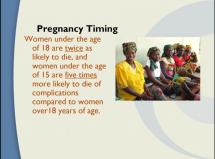
Healthy Timing and Spacing of Pregnancy (HTSP): For Healthy Babies, Healthy Mothers, and Healthy Communities

This presentation was used in religious leader orientation by the Christian Health Association of Kenya to introduce the community-based family planning (FP) services of church-based health facilities in the IRH 2011 project. CHAK worked with pastors to develop plans for including FP information in sermons and other activities and to use the Bible Study discussion guide mentioned above. CHAK reported that the HTSP PowerPoint slides really helped the pastors to understand the importance of FP.

Source: Institute for Reproductive Health

Date of Publication: March 25, 2019

Household Survey Report Uganda 2012

The objective of this household survey was to monitor consumer treatment-seeking behavior for fever in children under five, including

  • Types of medicines (specifically, antimalarials) and diagnoses obtained
  • Sources visited for advice
  • Treatment and diagnosis
  • Price paid for antimalarials
  • Caregiver knowledge and awareness of fever symptoms and antimalarials

This study uses data from a cross-sectional household survey of children’s caregivers. The household survey was designed to monitor all key malaria treatment indicators, as well as additional indicators addressing sources of treatment for fever, antimalarials and diagnostics.

Source: PSI, Rollback Malaria

Date of Publication: March 25, 2019

Impact of Egypt Gold Star Campaign

This brief describes the Gold Star campaign which took place in Egypt from 1995-1998. It aimed to upgrade the quality of Egypt’s family planning services while creating among the public and service providers an expectation that services would meet the new standard of higher quality. It stimulated the supply of quality services through better training and supervision of health care providers and it stimulated demand by promoting these higher quality services to the public.

Source: Johns Hopkins Center for Communication Programs

Date of Publication: March 25, 2019

Implementing the Social Network Diffusion Package: Costing Exercise Report

Tékponon Jikuagou is a USAID-funded six-year project that aims to reduce unmet need for family planning in Benin through social network interventions.

The project is comprised of multiple, interlinked components, including a community social network mapping exercise, guided discussions with influential groups and people identified from mapping, radio programs that rebroadcast group discussions, and activities to link family planning clients to service providers. It was crafted with expansion in mind, and as such was designed from the beginning to be implemented with the resources likely to be available during routine project implementation, as well as simple enough and reasonably-price so that new user organizations could easily integrate the package into their programs (its scalability).

The costing exercise was designed to provide critical information to potential user organizations as they consider how to scale up the Tékponon Jikuagou package, or integrate components into existing activities.

The exercise had four main objectives:

  1. Estimate the cost of introducing the Tékponon Jikuagou intervention as a stand-alone package in other parts of Benin.
  2. Provide information on the cost of introducing and implementing individual components of the Tékponon Jikuagou intervention package.
  3. Provide information and insights on the cost of scaling the Tékponon Jikuagou package.
  4. Contribute to the body of knowledge on costing community-based interventions for social norms transformation.

Source: Institute for Reproductive Health / Georgetown

Date of Publication: March 25, 2019

SIMILIAR RESOURCES

Tools

Examples

Implication des jeunes hommes du secteur informel dans la PF en utilisant un design centré sur l’homme en Côte d’Ivoire/ Engaging young men from the informal sector in FP using human centered design in Cote d’Ivoire

La recherche participative se concentre sur les jeunes hommes âgés de 15 à 24 ans travaillant dans le secteur informel dans deux quartiers d’Abidjan, ainsi que leurs partenaires, parents, patrons, leaders communautaires et autres influenceurs directs ou indirects. Les aperçus permettront d’identifier une activité, une méthode ou une autre ressource à prototyper et de formuler des recommandations pour une adaptation ou une mise en œuvre future à grande échelle; le rapport d’activité est disponible en français et anglais.


Participatory research focuses on young men 15-24 working on the informal sector in two neighborhoods of Abidjan, and also includes their partners, parents, bosses, community leaders, and other direct or indirect influencers. Insights will allow to identify an activity, method, or other resource to be prototyped and base recommendations for future adaptation or implementation at scale; the activity report is available in English and French.

Source: Transform/PHARE

Date of Publication: March 25, 2019

SIMILIAR RESOURCES

Tools

Examples