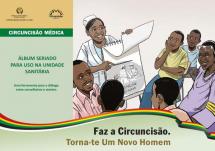
Mozambique Medical Circumcision Flipchart

This flipchart was produced as part of the Medical Circumcision project in Mozambique. The flipchart is designed to be used in a clinic setting, and includes information on: what is medical circumcision, how it is performed, advantages for adults and youth, for men and also for women, level of pain that can be expected, recovery time, possible complications, resuming sexual relations, and preventing HIV transmission/infection.

Source: Mozambique Ministry of Health

Date of Publication: March 25, 2019

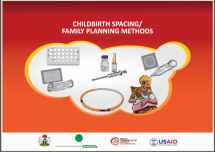
Family Planning Service Providers IPC Guide

This is a guide for Nigerian service providers to help them in counselling FP clients on different methods of FP and Childbirth Spacing (CBS) for the adoption of a modern contraceptive method. It was didstributed in Ebonyi, Sokoto, and Bauchi states.

Source: Johns Hopkins Center for Communication Programs

Date of Publication: March 25, 2019

Malawi – Moyo ndi Mpamba Campaign Community Health Worker Flipchart

This Community Health Worker Flipchart is an integrated SBCC support material that contains cue cards and corresponding content on SSDI-Communication’s six focal health areas that aligned with the messages included in the Family Health Booklet. The flipchart is simple and easy to use, even for low-literate audiences. SSDI-Communication developed flipchart in close collaboration with the Ministry of Health for SSDI-Services and Ministry of Health community volunteers to use as a reference during community and household outreach activities.

Over 12,000 Community Health Worker Flipcharts reached communities in Malawi in 13 districts. SSDI-Communication oriented over 8,000 community health workers and volunteers on how to use it to support families to adopt healthy behaviors. Anecdotal reports indicate that the Flipchart has filled a gap in basic health information at a literacy level appropriate for audiences in rural areas.

SSDI-Communication supported the Ministry of Health in realizing its ambitious health promotion agenda by developing and running a multimedia, multi-level Moyo ndi Mpamba, Usamalireni (“Life is precious, take care of it”) campaign, from 2011-2016. The ultimate goal of this campaign was to promote positive health behaviors and create demand for available services across six focus health areas – HIV & AIDS; family planning; nutrition; maternal, neonatal and child health; malaria; and water, sanitation and hygiene – and with audiences across the socio-ecological landscape and all targeted life stages.

Source: SSDI-Communication

Date of Publication: March 25, 2019

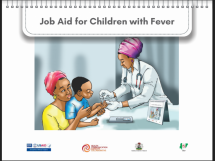
Malaria Provider Behavior Campaign Job Aid

These are counseling and point of care materials developed for health facility providers and Proprietary Patent Medicine Vendors (PPMV) on adherence to Rapid Diagnotic Test (RDT) for malaria results. These are focused on resolving common misconceptions and issues encountered by providers, with the goal of building their confidence in the tests and in their ability to manage logistical, interpersonal and technical issues. The materials are:

  1. Job Aid for Children with Fever
  2. RDT Reminder Danglers
  3. RDT Reminder Posters

They were distributed in Akwa Ibom, Kebbi & Benue among Health Facility Providers and PPMVs, and were distributed to about 210 health facilities and PPMV shops actoss the three states.

Source: Johns Hopkins Center for Communication Programs

Date of Publication: March 25, 2019

Malaria IPC Guide for Nigeria

This tool was developed to guide house-to-house Interpersonal communication .The goal is to build and sustain community support for appropriate malaria prevention, diagnosis and treatment behaviours

The objectives of the guide are:

  • To create awareness and sensitize community members using pictures and demonstrations to pass malaria information to enable people to remember what the community health worker taught the
  • To intimate community members with basic knowledge of prevention, treatment and management of Malaria.
  • To promote the patronage of GF supported health facilities in the various LGAs assigned to them
  • To establish and maintain a cordial relationship between CBOs, health facilities and other key stakeholders.
  • Partnership is key. Associate with partners to be able to link beneficiaries to where commodities are available.
  • Community members are expected to have improved knowledge of Malaria.
  • Improved access to health care services in GF supported health facilities
  • Effective referral and follow-up to health facilities.
  • Community members should be able to identify early symptoms of Malaria disease and report to appropriate quarters for attention.

Source: Federal Ministry of Health Nigeria

Date of Publication: March 25, 2019

HIV/STI Flipchart

This is a HIV/STI flip chart from the Nepali Saath-Saath Project.

It provides basic information on HIV/AIDS, STIs and Gender-Based Violence (GBV) during outreach session. This helps to increase awareness and risk perception of HIV, STI and GBV, motivate to seek HIV, STI and GBV services while sensitizing and empowering female sex workers transgender sex workers to prevent GBV by making them aware of sexual and reproductive health rights and legal provisions.

Source: USAID

Date of Publication: March 25, 2019

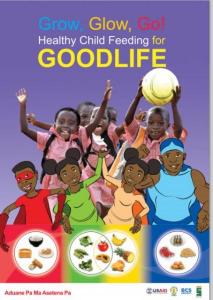
Grow.Glow.Go: Healthy Child Feeding for GoodLife Flip Chart

The Grow.Glow.Go Nutrition Flip Chart is a 36-page spiral bound, laminated document with a triangular stand containing a detailed blueprint for child nutrition from birth to 5 years of age.

The flipchart, designed for use by health workers and community agents in discussion with caregivers, covers the following developmental stages: 0-6 months, 6-9 months, 9-24 months and 2-5 years. The flipchart addresses anemia, prevention of food contamination, and hygiene of caregivers.

Source: Johns Hopkins University Center for Communication Programs

Date of Publication: March 25, 2019

Ghana BCS Media Materials Inventory

This is an inventory of all of the media/materials produced under the Ghana Behavior Change Support (BCS) Project from 2009-2013.

The main objectives of the project are to increase demand and use of commodities, services and positive behaviors in the areas of:

  • Maternal Neonatal Child Health and Family Planning Services
  • Malaria prevention and treatment
  • Nutrition
  • HIV/AIDS prevention, care and support
  • Water, Sanitation and Hygiene

The project was also charged with improving behavior change communication (BCC) capacity at the national, district and community levels.

Source: Johns Hopkins University Center for Communication Programs, Family Health Division of the Ghana Health Service

Date of Publication: March 25, 2019

FCHV Flip Chart

This is flip chart is for use by female community health volunteers (FCHVs), and is a product of the Saath-Saath Project. It is designed to provide information to FCHVs regarding family planning methods and HIV/STI so that they can disseminate correct information to the community.

Source: USAID

Date of Publication: March 25, 2019