Aiisseee! (I Say!) Game Show Radio Campaign Post-test Report

Aiisseee! is a 30-minute radio show in Tanzania aired by Radio Clouds weekly on Sundays 6.45pm to 8.00pm.

JHU created this show in the form of questions and answers to make couples (who are dating, married over a short period of time and married over a long period of time) compete, to determine which couple knows each other well. The couple that wins the contest gets a prize and the prizes differ from one episode to another. This show/contest is very entertertaining, original and motivates couples to have healthy relationships. The target audience for the show is men, women, and couples of reproductive age. The objective of the show is to improve couple communication and promote couple connectedness.

The objectives of the post-test exercise were to analyze results after the first season of the show:

1. Find what the audiences like about the show.
2. Find out what the audiences don’t like about the show.
3. To get any input on improving the show and how.

Two focus group discussions with 8 participants for males and females were conducted.

Overall both groups liked the show and they offered input in some areas for making it even better. The main issue with regard to achieving the objective of the show which is to build skills in how to communicate effectively with and better relate to one’s partner.

Source: Johns Hopkins University Center for Communication Programs

Date of Publication: March 25, 2019

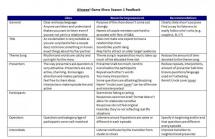
Aiisseee! (I Say!) Game Show Season 1 Feedback

Aiisseee! (“I Say!”) is a television and radio-based game show designed to improve couple communication and promote couple connectedness by giving contestants and listeners the chance to discuss serious relationship issues in a humorous way. In these programs, couples answer questions to see how well they know their partners.

The programs are a project of the Tanzania Capacity and Communication Project (TCCP).

The show acts as a platform for conversations about HIV prevention, maternal and child health, and family planning, using a subtle yet provocative approach to create a comfortable forum for addressing hard-to-discuss issues in a non-confrontational way.

This is feedback from both viewers/listeners and stakeholders after the first season of the program, and provides their reactions to likes, room for improvement and recommendations in the following categories:

  • General
  • Title
  • Theme Song
  • Presenters
  • Participants
  • Questions
  • Interstitials
  • Recruitment
  • Prizes
  • Broadcast
  • Other

Source: Johns Hopkins University Center for Communication Programs

Date of Publication: March 25, 2019

Alive & Thrive Infant and Young Child Feeding Community-based Support Group Model in Viet Nam

Alive & Thrive is an initiative in Vietnam aimed at improving infant and young child feeding by increasing rates of exclusive breastfeeding and improving complementary feeding practices. This document describes the IYCF support group model, how it is established, and the tools used in its implementation. It focuses on the establishment of IYCF support groups for pregnant women and mothers of children 0-5 months; mothers of children 6-23 months; and fathers, grandmothers, and other community members in remote areas where ethnic minorities reside. IYCF support groups promote optimal breastfeeding and complementary feeding practices by providing a space where participants can share knowledge, information, and their own IYCF experiences as well as provide mutual support to one another. IYCF support groups are facilitated by trained community-based workers (CBWs) who have IYCF knowledge and have mastered some group dynamic facilitation skills.

Source: Alive & Thrive

Date of Publication: March 25, 2019

ARH Stakeholder Workshop Meeting Summary

These are the minutes from a three-day stakeholders’ workshop held in 2002 as part of the Adolescent Reproductive Health Campaign.

This workshop used participatory techniques to elicit participants’ perspectives and analysis, and to build consensus within the group.

Source: Bangladesh Center for Communication Programs (BCCP)

Date of Publication: March 25, 2019

Attitudes, Beliefs and Practices Relevant to Malaria Prevention and Treatment in Liberia

A cross-sectional survey was implemented in Liberia in 2014 with the primary aim of identifying attitudes and beliefs that are associated with four outcomes of malaria prevention and treatment:

  • Use of bed nets
  • Receipt of malaria prophylaxis during antenatal care visits
  • Use of health services when a child has an episode of fever
  • Acceptance of indoor spraying

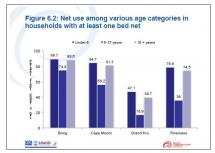
This report examines the relationship of socio-demographic variables, ideational factors, exposure to malaria messages and household variables with prevention and treatment behavioral outcomes. Indoor residual spraying was common in targeted areas: 50 percent of sampled households in the five districts reported being covered by PMI were sprayed at the time of the survey. Over a third of households had at least one net (36 percent).

However, in households with nets, most caretakers slept under a net on the night before the survey. Treatment of child with fever was almost universal and about two-thirds of treated children received Artemisinin-based Combination Therapy (ACT) (67 percent). About half of the children who received ACT did so the same or next day of the start of the child’s fever.

The majority of pregnant women (91 percent) reportedly took medicine to prevent malaria; almost all of these women reported that they took at least one dose of sulfadoxine/pyrimethamine (SP). Uptake of at least two doses of Intermittent preventive treatment of malaria (IPTp2+) was widespread with 75 percent of women with children ages two years old or younger reporting that they took two or more doses of the medication during their last pregnancy.

Source: Johns Hopkins University Center for Communication Programs

Date of Publication: March 25, 2019

Bangladesh MoHFW Comprehensive SBCC Strategy

This National Comprehensive SBCC Strategy was officially disseminated on August 30, 2016 by BKMI and the Ministry of Health & Family Welfare.

This strategy includes direction for:

  • SBCC to be used to promote healthy behaviors at the community and household levels
  • SBCC to encourage social norms that support positive health behaviors and improved health outcomes
  • SBCC to drive demand for services

Source: Johns Hopkins Center for Communication Programs

Date of Publication: March 25, 2019

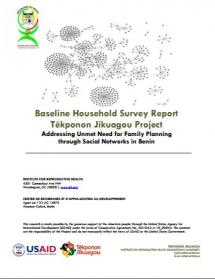
Baseline Household Survey Report Tékponon Jikuagou Project

The main objective of the baseline household survey was to collect data on study respondents’ attitudes and behaviors related to fertility, child spacing and family planning, to identify their family planning need status, and to learn about their social networks. Results will to help refine the design and implementation of the Tékponon Jikuagou interventions to reduce unmet need, and will ultimately be compared to similarly designed endline survey, to evaluate the interventions. The household survey was conducted in all six communes in the department of Couffo.

Source: Instittue for Reproductive Health, Goergetown

Date of Publication: March 25, 2019

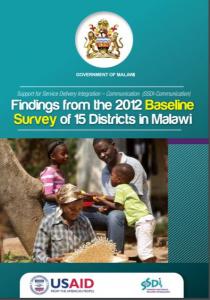
Baseline Survey of 15 Districts in Malawi, 2012

This survey was conducted to measure levels of predictors of positive health practices, particularly knowledge, self-efficacy, risk perceptions, and social normative perceptions in 15 districts in Malawi. It also established baseline measures against which to measure change in key health practices across a broad range of health areas as well as in the area of health communication.

These findings provided meaningful insight contributing to the design, development, implementation and evaluation of the resulting Moyo ndi Mpambo communication interventions.

Source: SSDI-Communication

Date of Publication: March 25, 2019

Baseline Survey for PAC Project, Kenya

A baseline data collection exercise was carried out from May to June 2010 in Naivasha District to provide a benchmark against which the RESPOND intervention may be measured during endline evaluation. The evaluation used
a quasi-experimental design with intervention and control groups covering six study sites within Naivasha District, with measurements taken at baseline and endline. The baseline data collection comprised three components

  • A community-based survey of approximately 600 women between the ages of 18 and 49
  • An inventory of all public and private health facilities in the study area (n=11)
  • Interviews with providers working at the identified facilities

Results included the following

  • There is a clear need for PAC services at the evaluation sites
  • Utilization of health services during pregnancy and delivery is limited
  • Knowledge of family planning is high, but actual use is significantly lower
  • Reasons for nonuse of family planning highlight the need for the intervention

Source: EngenderHealth

Date of Publication: March 25, 2019

Beyond Bias Literature Review and Expert Interviews on Provider Bias in the Provision of Youth Contraceptive Services:

The purpose of this review is to provide a comprehensive assessment of what is known about provider bias in the provision of reproductive health services to adolescents, with the ultimate aim to inform interventions that improve the demand and delivery of a full range of contraceptive methods.

This review has four key scoping parameters

  • Define and organize types of provider biases and drivers or underlying influencers of bias. W
  • Characterize adolescents as the objects of provider bias, discussing their unique needs, attributes, and behaviors and their effects on the interpersonal exchanges between youth and providers in clinical settings.
  • Add practice-relevant context to bias classifications and types, we present how attitudinal and behavioral bias is detected and measured, including how conclusions were made and in what countries these methods are most relevant.
  • FBuild towards solutions, providing insights into interventions for reducing provider bias.

These hypothetical ‘segments’ can provide a starting point for a statistical segmentation that will be developed and used to facilitate the design and targeting of interventions that specific to the unique needs, attitudes and behaviors of individual provider segments and inherently designed to reduce provider bias at scale.

Source: Camber Collective

Date of Publication: March 25, 2019