Beyond Bias: Provider Survey and Segmentation Findings

Pathfinder International worked with Camber Collective, YLabs, and Behavioral Economics in Reproductive Health (BERI) to implement the 3-year project (November 2016 – October 2019) to better understand and address provider bias. The primary outcome of the project is to increase access to a range of contraceptive methods offered through high quality provider-client interactions during contraceptive counseling and service provision for young people aged 15-24, regardless of marital status or parity, in targeted areas of Tanzania, Burkina Faso, and Pakistan. This report focuses on the quantitative and qualitative analysis conducted in Phases to inform provider segmentation and solution development.

Major insights of the quantitative survey results highlight a wide array of factors that influence how providers serve clients unsurprisingly demonstrate that bias exists among providers. Given the wide range of provider behavior, we conducted a segmentation analysis to understand the different sub-groups of providers that exist and the potential levers best suited to encourage positive behavior change. This approach looks beyond demographic factors, focusing more on attitudinal and behavioral characteristics.

A technical brief summarizing the findings and applications is available in English and French.

Source: Camber Collective

Date of Publication: March 25, 2019

Case Studies using Human Centered Design

This page on the IDEO site lists several case studies in which country projects used Human-Centered Design (HCD) to change behavior.

The stories break down n each phase of process so that the reader can see what the design teams did, what they learned, and how it all adds up to successful solutions.

The case studies include the following:

  • Asili – A sustainable community-owned health, agricultural, and water business in the Democratic Republic of the Congo
  • SmartLife – Designing a Scalable Water and Hygiene Business in Kenya
  • Brilliance by D-Rev – Combatting Jaundice in the Developing World
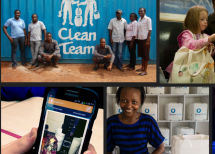
  • Clean Team – In-Home Toilets for Ghana’s Urban Poor

Source: IDEO

Date of Publication: March 25, 2019

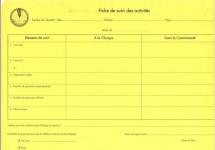
Cercle d’Or Fiche de Suivi des Activites [Gold Circle Activity Card]

This is a card used in the Gold Circle campaign in Africa, to track an individual health clinic site’s activities, such as visits, people referred to the clinic, and other information

Source: Johns Hopkins University Center for Communication Programs

Date of Publication: March 25, 2019

CHCT Materials Pretest Report

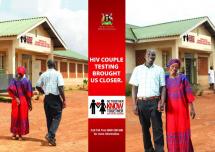
The Uganda Go Together, Know Together campaigned was a national couples HIV counseling and testing campaign.

The campaign, initiated in 2009, aimed to curb the rate of new HIV infections in Uganda by empowering married and cohabiting couples to assess their risk of HIV infection, test together for HIV, and adopt practices that improve their health.

This is a report about pretesting which took place for the campaign posters.

Source: Johns Hopkins University Center for Communication Programs

Date of Publication: March 25, 2019

Communication for Healthy Living: Egypt – Legacy Video

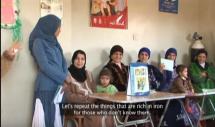
This video provides an overview of the Communication for Healthy Living Project in Egypt. It covers each of the project’s campaigns, with testimony from members of communities speaking about how the program affected and improved their lives.

Source: Johns Hopkins University Center for Communication Programs

Date of Publication: March 25, 2019

Community Dialogue for Child Health: Results from a Process Evaluation in 3 Countries

This learning brief presents results from a rigorous process evaluation conducted in 3 countries, aiming at assessing if the community dialogue approach implemented was appropriate and effective in raising demand for iCCM services at community level.

Source: Malaria Consortium

Date of Publication: March 25, 2019

Community Dialogues for Child Health

This Learning Brief summarizes a qualitative process evaluation conducted to assess communities’ response to a community dialogue approach, after one year of implementation in rural settings of three countries (Mozamique, Uganda and Zambia), in terms of outreach, relevance and intermediate results.

The study finds that community dialogues can be a powerful approach to make health promotion activities of community-based volunteers more participatory and effective in addressing social norms around child care practices, particularly in setting new social norms for early care-seeking at community health worker point of care.

Source: Malaria Consortium

Date of Publication: March 25, 2019

Community Mobilization for PAC in Kenya: Evaluation Findings

This is a presentation of the evaluation of the Post Abortion Care project in Kenya, 2010-2012. The evaluation was carried out in 2012.

It includes main findings, photographs from the project, and quotations from those involved.

Source: EngenderHealth

Date of Publication: March 25, 2019

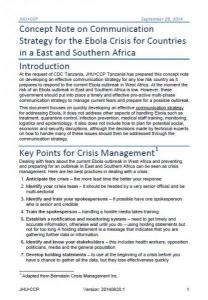
Concept Note on Communication Strategy for the Ebola Crisis for Countries in a East and Southern Africa

This document focuses on quickly developing an effective communication strategy for addressing Ebola. It does not address other aspects of handling Ebola such as treatment, quarantine control, infection prevention, medical staff training, monitoring, logistics and epidemiology. It also does not include how to plan for potential social, economic and security disruptions, although the decisions made by technical experts on how to handle many of these issues should then be addressed through the communication strategy.

Source: Johns Hopkins University Center for Communication Programs

Date of Publication: March 25, 2019

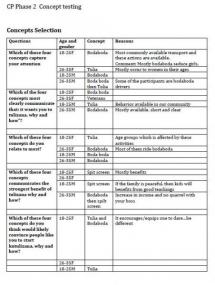
CP Phase 2 Concept Testing

This concept testing chart from a project in Tanzania lays out several groups of information: questions, age and gender, concept, and reasons.

The concepts are then ranked. This process is explained in the tool Developing and Testing Creative Concepts.

Source: Johns Hopkins University Center for Communication Programs

Date of Publication: March 25, 2019