HIV Self-Test Kits in Barber Shops: Cote d’Ivoire

This case study describes a pilot project in Cote d’Ivoire which promotes HIV self-testing via barbershops. Preliminary human-centered-based research resulted in a finding that barbershops were a key gathering point for men in Côte D’Ivoire. The HIV self testing promotions were also communicated via religious leaders and social media.

The aim was to convince men to undertake an online self-assessment tool that helps to determine their level of risk for contracting HIV. Those who are assessed as high risk were offered a self-testing kit. The kit can be accessed in a variety of ways, through a local pharmacy or health center or delivered by a peer navigator who can answer any questions and walk them though the process.

Deployed by local NGOs, peer navigators were trained to provide psychological and social support before, during and after HIV testing and the initiation of treatment. There were also tools to support men through the process of taking the test, including written instructions, online videos, and access to an HIV hotline, where workers were trained in how to take a self-test, interpret the results and support men who receive a positive result into beginning treatment.

Source: ThinkPlace

Date of Publication: March 25, 2019

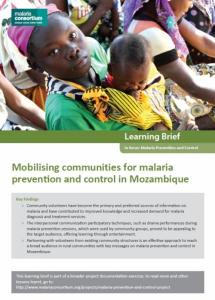
Malaria Learning Briefs

These are 4 learning briefs that document key results, challenges and lessons learned in implementing a five-year community involvement intervention to prevent and control malaria through a combination of interventions. These interventions include, in addition to universal coverage bed net distributions, training of community health workers, health committee volunteers and teachers, as well as partnerships with local radio stations to disseminate messages on malaria prevention and control practices. This mix of interventions improved knowledge and practices for malaria prevention, treatment seeking and community management.

The project aimed to support the efforts of the Mozambican government to reduce malaria throughout the country through scale-up of prevention and control efforts with community involvement. The learning briefs cover a range of topics

The briefs are as follows:

Malaria Prevention and Control in Mozambique: scaling up for universal access with community involvement (2011-2017): This project overview provides a summary of the Malaria Prevention and Control Project in Mozambique, its objectives, strategies, and key achievements. This project sought to contribute to a reduction in the number of malaria cases in the country through a range of interventions including working with community groups, training primary school teachers, and distributing long-lasting insecticidal nets (LLINs).

Mobilising communities for malaria prevention and control in Mozambique: This learning brief shares Malaria Consortium’s experience in partnering with existing community structures and building the capacity of community-based volunteers to deliver key messages around malaria, to increase uptake of prevention and treatment services within communities in Mozambique. It describes the intervention, and highlights a number of important lessons and challenges, as well as the necessary next steps to maximize the impact and sustainability of this approach.

Integrating malaria education into primary school activities: This Learning Brief shares Malaria Consortium’s experience in integrating edutainment-based malaria sessions into primary school classroom activities, to provide children with a basic knowledge around malaria transmission, symptoms, prevention, and care-seeking, as part of the Malaria Prevention and Control project in Mozambique. It highlights a number of important lessons and challenges, and the necessary next steps to maximize the impact and sustainability of this approach.

Nets bring good health: a qualitative inquiry: This brief shares Malaria Consortium’s key findings from a qualitative inquiry into mosquito net use and care practices in two Northern provinces of Mozambique, Niassa and Nampula. It explores the experiences and drivers of mosquito net use, non-use or misuse, and local perceptions regarding recommended malaria prevention and control practices.

Source: Malaria Consortium

Date of Publication: March 25, 2019

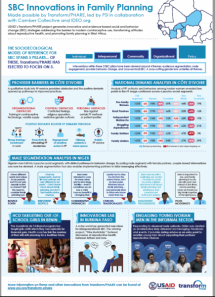
SBC Innovations in Family Planning

USAID’s Transform/PHARE project generates innovative and evidence-based social and behavior change (SBC) strategies addressing the barriers to modern contraceptive use, transforming attitudes about reproductive health, and promoting family planning in West Africa.

This infographic illustrates results and impact of programs in Cote d’Ivoire, Niger, Benin, and Burkina Faso.

Source: USAID

Date of Publication: March 25, 2019

Voices from the Community

Suaahara was a five year (2011-2016) project funded by USAID aimed to improve the nutritional status of women and children in 41 districts of Nepal. The project focused on improving health and nutrition behaviors at the household level through promotion of Essential Nutrition and Hygiene Actions (EN/HA), particularly Maternal, Infant and Young Child Nutrition (MIYCN), and addressing other determinants of under-nutrition, such as availability of and access to food, hygiene, quality of health care, child spacing and socio-cultural factors including gender and marginalization.

Voices from the Community is a collection of stories of individuals and families whose lives have been affected by Suaahara.

Source: Johns Hopkins University Center for Communication Programs

Date of Publication: March 25, 2019

The Monday Campaigns

The Monday Campaigns is a non-profit public health initiative associated with Johns Hopkins, Columbia and Syracuse universities that dedicates the first day of every week to health. Every Monday, individuals and the private sector join together to commit to the healthy behaviors that can help end chronic preventable diseases.

The group helps private sector and public sector organizations incorporate the Monday concept into their own health promotion programs by providing free research, creative materials, case studies and ready-to-scale programs. It supports individuals through consumer websites and social media with weekly recipes, tips and resources that can help them live healthier week after week.

The Monday movement has grown to include an array of schools and universities, businesses, communities, nonprofit and government organizations, and media outlets. Some utilize the campaign’s free resources while others create their own programs. Organizations contact the group if they want to incorporate the Monday concept into their own programs and/or collaborate with The Monday Campaigns and their partners to develop and disseminate evidence-based models.

The campaign also includes Workplace Wellness, which guides companies to create wellness programs for their employees.

Here is a list of the various Monday campaigns

Source: Monday Campaigns

Date of Publication: March 25, 2019

Partnering with Private Providers in South Africa to Offer Medical Male Circumcision Services: A Case Study

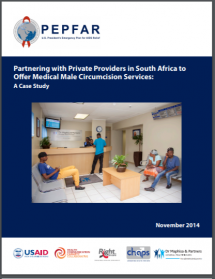
This is a case study about how a private medical practice successfully partnered with the Center for HIV and AIDS Prevention Studies (CHAPS) in South Africa to provide free medical male circumcision (MMC).

Dr. Maphisa & Partners provides high quality, yet affordable, healthcare in Johannesburg and surrounding townships. CHAPS – one of the largest NGOs focused on MMC as HIV prevention in Africa – approached the practice’s founder Dr. Shephard Maphisa in 2012 to ask him to provide MMC free of charge. His clinic already provided MMC but not at a very high volume.

Maphisa had some initial concerns that the free service might not be well received by his existing private clinic patients. But after receiving support and training from CHAPS, he launched in December 2012 and found it actually created new patients for his clinic. Family members of young men undergoing MMC came back to access Dr. Maphisa & Partners other services. And the clinic has gone from performing 500 circumcisions annually to nearly 12,000 in the past two years.

This partnership and similar ones initiated by CHAPS illustrate how the private sector can play a key role in scaling up MMC in South Africa to help prevent HIV.

Source: PEPFAR, FHI360

Date of Publication: March 25, 2019

Tunakuthamini (We value you) HIV Care and Treatment Campaign Overview

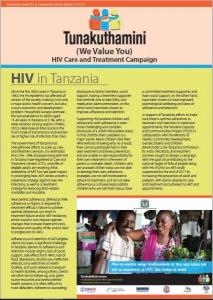
This 4-page overview provides information on the strategic design, implementation, monitoring, and evaluation of Tanzania’s Tunuakuthamini (We value you) national HIV care and treatment campaign.

Developed by the Tanzania Capacity and Communication Project (TCCP) under the leadership of the National AIDS Control Program (NACP) and the Tanzania Commission for AIDS (TACAIDS), Tunakuthamini targeted supporters of people living with HIV (PLHIV) as the primary audience, with PLHIV as the secondary audience.

Source: Johns Hopkins Center for Communication Programs

Date of Publication: March 25, 2019

Tanzania School Net Program

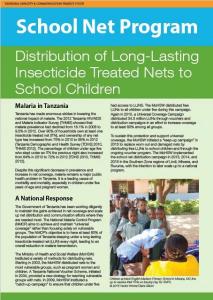
This brief describes the Tanzania School Net Program which involved distribution of treated nets to both children ages 6-14 years and heads of household as primary audiences, empowering these audiences to take action while clearly conveying the benefits of getting everyone covered – including neighbors – by drawing on popular “sharing” beliefs that exist in Tanzania. The school net program (SNP) also targeted primary school teachers, TCCP Community Change Agents, Ward Educational Coordinators, and other stakeholders, including local government authority (LGA) officials, heads of schools, ward and village officials.

The effort included community outreach, radio spots, district-wide events, and school activities.

Through the Patapata radio program, children were inspired to talk to their parents, friends, and communities about malaria prevention behaviors such as sleeping under a net every night, proper net use, net care and repair, and net sharing. Anecdotal feedback from Community Change Agents indicated that children enjoyed the program, and that parents reported increased interpersonal communication with their children about the importance of sleeping under the nets they were given at school.

Source: Johns Hopkins University Center for Communication Programs

Date of Publication: March 25, 2019

Success Stories of Satisfied Family Planning Users , Nepal

The Family Planning Services Strengthening Program ( FPSSP) is a project under USAID’s cooperative agreement with the Inernational Planned Parenthood Federation ( IPPF) for implementationof the Support for International Family Plannning Organizations ( SIFPO-2) : Sustainable Networks Project. The Family Planning Association of Nepal ( FPAN), an IPPF Member Association ( MA), serves as the Sustainable Network’s local implementing partner.

The overall objective of FPSSP is to strengthen the family planning service delivery system of the Family Health Division ( FHD)/Department of Health Services ( DoHS)/Ministry of Health ( MoH). It aims to increase voluntary use of family planning services by increasing accessibility and availability of quality comprehensive family planning services to the hard to reach, disadvantaged,migrants, and adolescent population to acheive universal coverage in the districts and increase access to voluntary family planning information, education and services.

These three success stories tell of real people who took advantage of the FP services and the happy results of their experience.

Source: Family Planning Association of Nepal

Date of Publication: March 25, 2019

Suaahara SBCC Materials Case Studies

These are case studies from the Suaahara Nepal activities promoting hygiene, family planning, and nutrition. The studies are divided by geographical areas in Nepal.

Source: Johns Hopkins University Center for Communication Programs

Date of Publication: March 25, 2019