IPC Training Aid Video and User’s Manual

The Nepal Family Health Program (NFHP-I) was a six-year (2002-2007) bilateral activity of United States Agency for International Development, Nepal (USAID/N) with the Government of Nepal. Its overall goal was to support the Government’s long-term goal of reducing fertility and under-five mortality within the context of the National Health Policy and Second Long-Term Health Plan 1997-2017. .

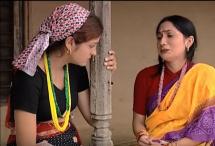
This interpersonal communication audio visual training aid and user’s manual was created to complement and supplement the national Female Community Health Volunteers (FCHV) Training Curriculum. The objective of the A/V training aide was to reinforce the content of IPC training sessions by demonstrating standard and effective IPC skills. The specific objectives were:

  • To help FCHVs understand the importance of IPC skills and practicing the skills in their work
  • To demonstrate FCHVs with standard, appropriate and consistent skills in IPC

The User’s Manual was developed for the users of the IPC training video, primarily for the trainers who conduct the FCHV basic and refresher training.

The total length of the A/V training aide is 30 minutes and the characters used in the video are imaginary. In this video, FCHVs portraying three different geographical areas – Terai, Hills and Mountains.

The IPC training video can be found here.

The User’s Manual can be found here.

Source: Johns Hopkins Bloomberg School of Public Health/ Center for Communication Programs

Date of Publication: December 11, 2019

Stand Proud, Get Circumcised

This was an initiative to provide safe male circumcision (SMC) as an essential health service. The initiative sought to increase the number of circumcised men by educating the population about safe male circumcision, increasing the number of health facilities that provide circumcision services and equipping health providers with the necessary skills to conduct the procedure.

The multi-channel the Safe Male Circumcision campaign was launched in late 2011 with the following objectives:

  • To create awareness and provide necessary information on safe male circumcision services
  • To help people make informed decisions about safe male circumcision and HIV prevention
  • To increase demand and promote uptake of SMC in Uganda

Source: Johns Hopkins University Center for Communication Programs

Date of Publication: June 15, 2019

Aha ye de – Explosion

Let’s come together and drive malaria away for the GoodLife. In June 2011 BCS and ProMPT, in partnership with the National Malaria Control Programme and the Ghana Health Service, launched the new “Aha ye de” malaria campaign. “Aha ye de” means “It’s Good Here” in Twi, one of Ghana’s national languages.

The campaign is designed to reposition the use of treated nets as a lifestyle decision, while at the same time preventing malaria, linking to the BCS’s overarching GoodLife campaign. The campaign seeks to increase risk perception by emphasizing the severity and threats of malaria. At the same time, the campaign empowers individuals to use malaria prevention and appropriate treatment. This video features the popular Ghana hiplife artist Nana Boroo who re-recorded his hit single Aha ye de as the Ntom tom be wu re-mix (Mosquitoes will Die). The remix was officially unveiled on Wednesday June 15th, 2011 at Citizen Kofi in Accra. This 35 minute video documents the project and its activities.

Source: Johns Hopkins University Center for Communication Programs

Date of Publication: March 25, 2019

Ashal Logne (Good Husband) Video on Safe Motherhood

The Nepal Family Health Program (NFHP-I) was a six-year (2002-2007) bilateral activity of United States Agency for International Development, Nepal (USAID/N) with the Government of Nepal. Its overall goal was to support the Government’s long-term goal of reducing fertility and under-five mortality within the context of the National Health Policy and Second Long-Term Health Plan 1997-2017.

Under the MNH project, a TV drama called “Ashal Logne” (Good Husband), a television drama was developed and produced by the famous artistic duo, Madan Krishna Shrestha and Hari Bansha Acharya (MAHA) to reiterate and reinforce the messages put out by SUMATA campaign on support and participation of mother in laws and husbands during pregnancy, delivery and postnatal periods. The drama also draws attention to messages on birth preparedness and complications readiness.

Ashal Logne was further rebroadcast and integrated into the local cable TV network of the 17 NFHP CPDs. The product had been very popular and received an overwhelming responses from the audiences, as a result, the products were aired free of cost through sponsorship program by various private TV channels such as Kantipur TV, Channel 1, A1, Nepal I channel and Image TV.

In the story, Gauri and Lalita are neighbors, Gauri leads a life of hardship and finds support and friendship with Lalita. “Ashal Logne” illustrates that this is not enough to sustain a happy and healthy life for a women, unless she gets support and care from her mother in law and her husband. This point is verified when Lalita who is taken care of by her family, especially during her pregnancy gives birth to a healthy baby. While Gauri, who has never received support nor been taken care of by her family continues to have miscarriages. Unfortunately, her family does not realize that, if only she was also taken better care of during her pregnancy she too could have given birth to a healthy baby.

Through these chains of event, the drama demonstrates how necessary a mother in laws and a husband’s involvements are in a women’s life, especially during her pregnancy, delivery and postnatal periods. It also shows how necessary it is to be prepared for birth and be ready for complications.

The English sub-titled version of this video can be found at the following links:

Source: Johns Hopkins Bloomberg School of Public Health/ Center for Communication Programs

Date of Publication: March 25, 2019

Bangladesh ARH Videos

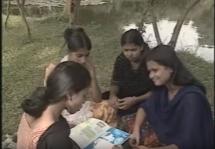
These videos were produced to accompany comic books and other materials as part of the Adolescent Reproductive Health “Know Yourself” campaign in Bangladesh.

The Adolescent Reproductive Health (ARH) Communication Program addressed the gap between knowledge and practice through its multi-pronged communication strategy focusing on priority adolescent issues revealed by adolescents themselves.

The videos are as follows:

Source: Johns Hopkins University Center for Communication Programs

Date of Publication: March 25, 2019

CCP Bangladesh Reproductive Health Legacy Video

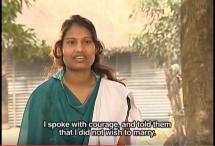
This short film illustrates how behavior change communication can help improve the lives of individuals. It tells the story of Moni Mostafa, a young girl in Bangladesh and her learning experience at a life skills training workshop on adolescent reproductive health.

Source: Johns Hopkins University Center for Communication Programs

Date of Publication: March 25, 2019

Cholera Prevention Animated Video

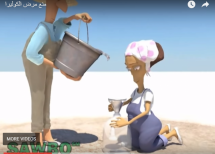
This video, which can be used on smart phones, describes several techniques that can be used to help prevent cholera, including methods of treating water, washing of hands, and seeking medical advice if/when one has the symptoms of cholera.

The video is available for download in many languages and can be downloaded to a computer, cell phone, smart phone, or for broadcast.

Source: SAWBO

Date of Publication: March 25, 2019

Cholera Questions and Answers

This two minute video offers answers to basic questions about cholera.

It covers:

  • What is cholera
  • Symptoms
  • Treament
  • Prevention
  • Vaccine

Source: World Health Organization

Date of Publication: March 25, 2019

Clean Hands Count Campaign

These materials were created by the US Centers for Disease Control and Prevention to promote handwashing.

The campaign aims to:

  • Improve healthcare provider adherence to CDC hand hygiene recommendations
  • Address the myths and misperceptions about hand hygiene
  • Empower patients to play a role in their care by asking or reminding healthcare providers to clean their hands

Included in the campaign are videos, posters, factsheets and brochures. There are also infographics, a digital press kit, a press release, and web buttons.

Source: US Centers for Disease Control and Prevention

Date of Publication: March 25, 2019

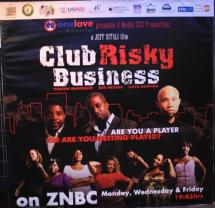
Club Risky Business – Behind the Scenes

This is a behind the scenes documentary of the making of Club Risky Business, the centerpiece of the OneLove Kwasila! Campaign in Zambia (2009)

Source: Johns Hopkins University

Date of Publication: March 25, 2019